

Blog
Exercises for Seniors: 12 Active Aging Workouts for Over 60s


Staying physically active as you age brings remarkable benefits for your body, mind, and overall quality of life. Regular exercise for older adults helps maintain independence, reduces fall risk, strengthens bones and muscles, and keeps your mind sharp well into your later years.
Active aging through consistent exercise isn’t about intense gym sessions or marathon training. It centres on gentle movement that supports your body’s changing needs whilst building strength, balance, and flexibility over time.
This guide covers the best exercises for seniors, organised by benefit type so you can focus on what matters most for your health. Whether you want to improve your balance, build strength, or simply stay mobile and independent, these NHS-aligned workouts provide a safe starting point for healthy aging.
Quick Answer: What Is the Best Exercise for Seniors?
The best exercise for seniors combines balance training, strength exercises, and flexibility work. Walking, chair exercises, gentle yoga, and resistance band movements provide excellent results for over 60s and over 70s alike. Aim for 150 minutes of moderate activity weekly, spread across several days.
Why Exercise Matters for Seniors
The benefits of fitness for seniors extend far beyond physical health. Regular movement helps prevent chronic conditions, maintains cognitive function, and supports emotional wellbeing.
Physical Benefits:
- Maintains muscle mass and prevents age-related strength loss
- Strengthens bone density and reduces osteoporosis risk
- Improves cardiovascular health and circulation
- Enhances flexibility and joint health
- Reduces chronic pain from arthritis and other conditions
- Improves posture and coordination
Mental and Emotional Benefits:
- Sharpens memory and cognitive function
- Reduces symptoms of anxiety and depression
- Improves sleep quality
- Boosts confidence and sense of independence
- Provides social connection through group activities
Research consistently shows that senior exercises significantly reduce fall risk, which remains one of the leading causes of injury in those over sixty. Even gentle exercises for elderly create meaningful improvements in stability and mobility.

How Much Exercise Should Seniors Do?
How much exercise should a 70 year old do? The NHS recommends that adults over sixty-five aim for at least 150 minutes of moderate activity per week. This breaks down to roughly thirty minutes on five days, though you can split sessions into shorter blocks throughout the day.
Weekly Activity Guidelines:
- 150 minutes of moderate aerobic activity (brisk walking, cycling, swimming)
- Strength exercises on at least two days weekly
- Balance and flexibility work incorporated regularly
- Low impact exercises for seniors reduce joint stress
How to start exercising at 60: Begin slowly with 10–15 minute sessions and build gradually. Consult your GP before starting any new exercise programme, particularly if you have existing health conditions.
Balance Exercises for Seniors (Fall Prevention)
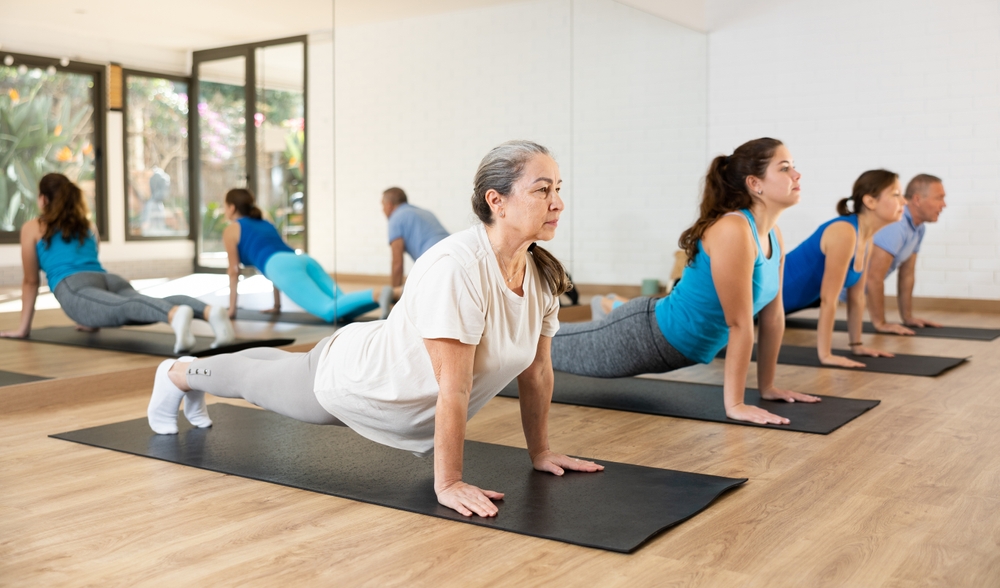
Fall prevention exercises rank among the most valuable activities for older adults. Exercises to improve balance in elderly reduce accident risk and build confidence in daily movement.
1. Single Leg Stand
This balance exercise for seniors builds stability and leg strength.
How to do it:
- Stand behind a sturdy chair with both hands resting lightly on the back for support
- Lift your right foot off the floor and balance on your left leg for 10–15 seconds
- Lower your foot and repeat on the opposite side
- As your balance improves, try holding with one hand, then eventually without support
Repetitions: 5 each leg, twice daily
2. Heel to Toe Walk
This exercise for balance and stability mimics everyday walking patterns.
How to do it:
- Position your right heel directly in front of your left toes, almost touching
- Step forward placing your left heel in front of your right toes
- Continue for 15–20 steps, walking in a straight line
- Keep your gaze forward and use a wall for light support if needed
3. Weight Shifting
What exercises help prevent falls? This simple movement strengthens the muscles that keep you upright during everyday activities.
How to do it:
- Stand with feet hip-width apart and arms relaxed at your sides
- Shift your weight onto your right foot, lifting your left foot slightly off the floor
- Hold for 10 seconds, then shift to the opposite side
- Repeat 10 times each side
Strength Training for Seniors
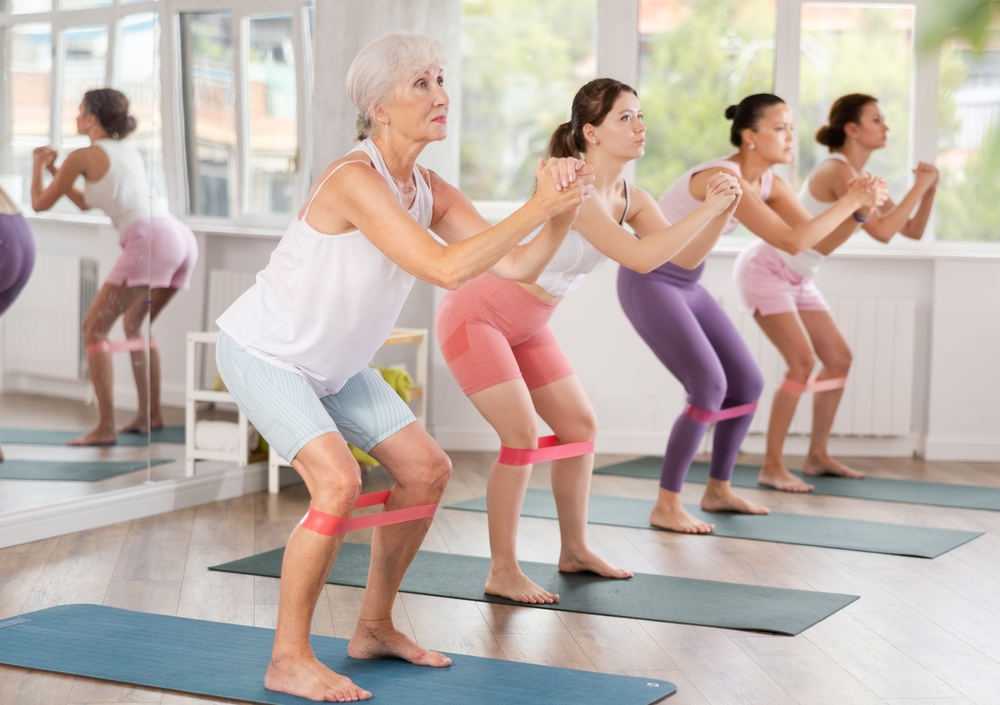
Building and maintaining muscle mass becomes increasingly important as we age. Strength training for seniors doesn’t require heavy weights or gym equipment. Bodyweight exercises and light resistance provide excellent results.
Can you build muscle after 60? Absolutely. Research confirms that consistent resistance training effectively builds muscle mass at any age, even in your seventies and beyond.
4. Chair Squats
This simple exercise for elderly strengthens thighs and glutes, making standing from seated positions easier.
How to do it:
- Stand in front of a sturdy chair with feet shoulder-width apart
- Lower yourself slowly until you touch the chair seat
- Push through your heels to stand back up
- Keep your weight in your heels and knees tracking over your toes
Repetitions: 10–15 repetitions, 2–3 sets
5. Wall Press Ups
This safe exercise for elderly builds upper body strength without floor work.
How to do it:
- Stand facing a wall at arm’s length
- Place your palms flat against the wall at shoulder height and width
- Bend your elbows to bring your chest toward the wall
- Push back to the starting position
Repetitions: 10–15 repetitions
6. Resistance Band Rows
Resistance band exercises for seniors strengthen back muscles and improve posture.
How to do it:
- Sit in a sturdy chair and loop a resistance band around your feet
- Hold one end of the band in each hand with arms extended forward
- Pull your hands toward your ribs, squeezing your shoulder blades together
- Slowly release and repeat
Repetitions: 10–15 repetitions
Chair Exercises for Seniors (Limited Mobility)
Seated exercises for seniors provide excellent options for those with limited mobility or balance concerns. Chair exercises for seniors allow you to build strength safely whilst reducing fall risk.
7. Seated Marching
This low impact exercise for seniors raises your heart rate and strengthens hip flexors.
How to do it:
- Sit tall in a sturdy chair with feet flat on the floor
- Lift your right knee toward the ceiling, then lower it back down
- Repeat with your left knee
- Continue alternating for 1–2 minutes
8. Seated Leg Extensions
This gentle exercise for elderly strengthens thighs without standing.
How to do it:
- Sit with your back against the chair and feet flat on the floor
- Slowly extend your right leg until it’s straight, hold for 2 seconds
- Lower and repeat with your left leg
Repetitions: 10 each side
9. Seated Side Bends
This flexibility exercise for seniors maintains spinal mobility and range of motion.
How to do it:
- Sit tall with feet flat on the floor and arms hanging at your sides
- Slowly bend to your right side, reaching your right hand toward the floor
- Return to upright and repeat on the left side
Repetitions: 10 each side
Yoga and Pilates for Seniors
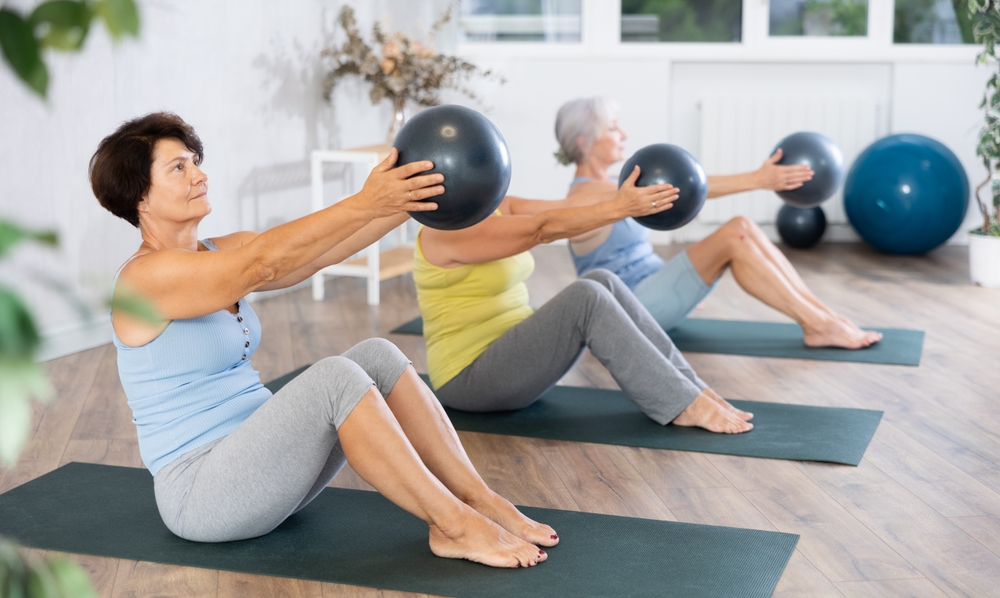
Yoga for seniors and pilates for seniors offer exceptional benefits for flexibility, balance, and mental relaxation. Is yoga good for seniors? Yes – these gentle practices adapt well for older bodies with appropriate modifications.
Are pilates good for over 60s? Absolutely – pilates builds core strength and improves posture safely.
10. Cat Cow Stretch
This mobility exercise for elderly keeps the spine supple and reduces back stiffness.
How to do it:
- Position yourself on hands and knees on a comfortable mat
- Inhale as you arch your back, lifting your head and tailbone toward the ceiling
- Exhale as you round your spine, tucking your chin toward your chest
- Continue flowing between these positions for 8–10 breaths
11. Seated Spinal Twist
This gentle yoga for seniors movement maintains spinal rotation.
How to do it:
- Sit tall in a chair with feet flat on the floor
- Place your right hand on the outside of your left knee
- Place your left hand on the chair back behind you
- Gently rotate your torso to the left, looking over your left shoulder
- Hold for 15–30 seconds, then repeat on the opposite side
Chair yoga for elderly provides the same benefits whilst seated safely.
12. Gentle Forward Fold
This stretching exercise for seniors releases tension in your back and hamstrings.
How to do it:
- Stand with feet hip-width apart
- Slowly hinge forward from your hips, letting your arms hang toward the floor
- Bend your knees generously to protect your lower back
- Let your head and neck relax completely
- Hold for 15–30 seconds, then slowly roll back up to standing
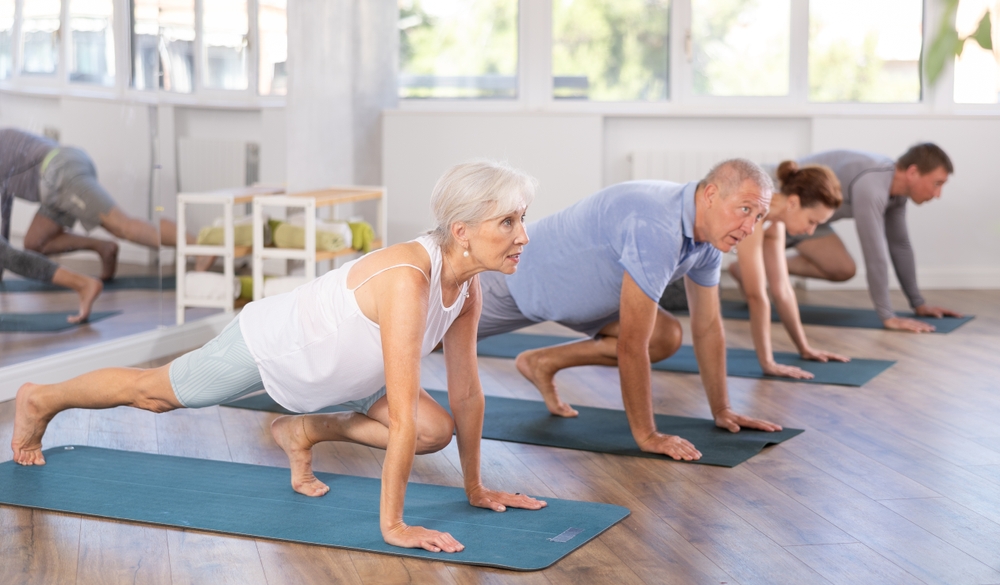
Easy Exercises for Seniors at Home
You don’t need gym equipment for effective daily exercises for seniors. These easy exercises for seniors at home require minimal space and no special equipment:
Morning exercises for seniors routine:
- 5 minutes: Seated marching to warm up
- 5 minutes: Chair squats and wall press ups
- 5 minutes: Balance exercises (single leg stand, weight shifting)
- 5 minutes: Gentle stretching (spinal twist, forward fold)
This 20-minute simple exercise for elderly routine covers strength, balance, and flexibility – the three pillars of functional fitness for active aging.
Getting Started Safely
Beginning an exercise routine after sixty requires thoughtful preparation. These guidelines help you start your active aging journey safely.
Before You Begin:
- Consult your GP if you have existing health conditions
- Start with shorter sessions and build gradually
- Choose appropriate footwear with good support
- Exercise in a clear space free from obstacles
- Keep water nearby and stay hydrated
During Exercise:
- Warm up with gentle movement for five minutes
- Stop immediately if you feel pain, dizziness, or shortness of breath
- Breathe steadily throughout each exercise
- Use furniture or walls for balance support when needed
- Cool down with gentle stretching afterward
Progression Tips:
- Add repetitions before increasing difficulty
- Aim for consistency over intensity
- Listen to your body and rest when needed
- Celebrate small improvements in stamina and endurance


