

Blog
Pregnancy Ball Exercises: Safe Routines for Every Trimester


Looking for safe, effective exercises to ease pregnancy discomfort and prepare your body for labour? A pregnancy ball offers one of the most versatile and gentle ways to stay active throughout your pregnancy journey.
Whether you call it a birthing ball, exercise ball, or pregnancy ball, this simple piece of equipment supports exercises that strengthen your body, relieve common pregnancy aches, and help position your baby optimally for birth through optimal fetal positioning.
This comprehensive guide covers pregnancy ball exercises by trimester, specific movements for common pregnancy issues including back pain and sciatica, and practical guidance on how to use a birthing ball safely and effectively.
Why Pregnancy Ball Exercises Matter
What exercises can you do on a birthing ball? Regular exercises on a birthing ball during pregnancy deliver genuine benefits that extend from early pregnancy through active labour and into postpartum recovery.
The unstable surface naturally engages your core muscles and pelvic floor without straining. Sitting and moving on a pregnancy ball encourages proper spinal alignment, opens your pelvis, and maintains hip mobility throughout all trimesters.
Most importantly, these safe pregnancy ball exercises are gentle enough for pregnancy whilst remaining effective enough to make a real difference to how your body feels and functions during gestation.
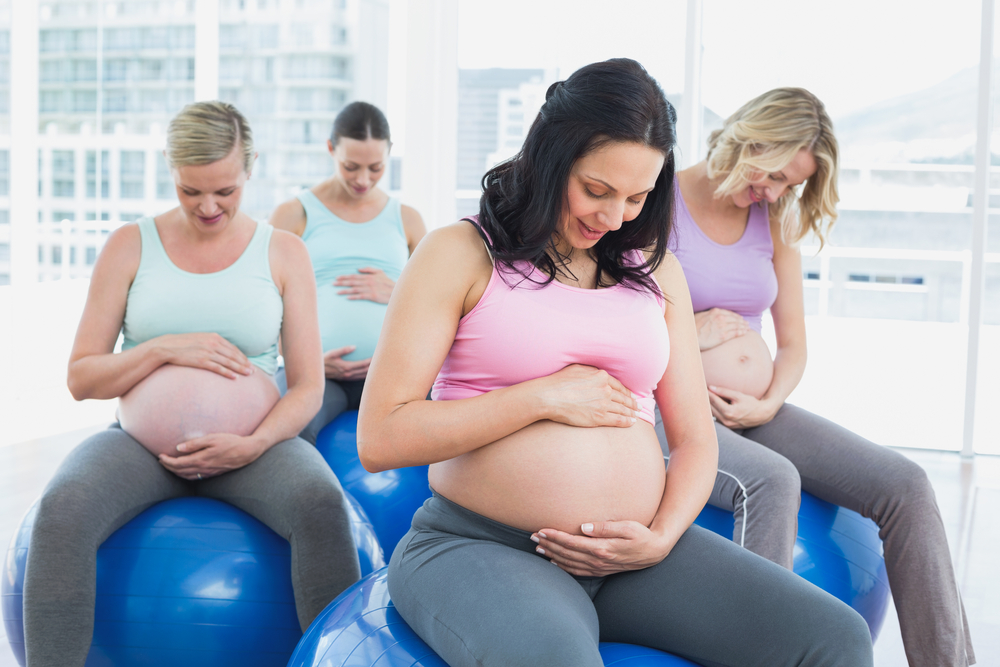
How to Sit on a Birthing Ball
Before exploring specific exercises, proper sitting technique establishes the foundation for all birthing ball positions.
How to sit on birthing ball during pregnancy correctly? Sit on the centre of your ball with your feet flat on the floor, approximately shoulder-width apart. Keep your knees at roughly 90 degrees, with your hips slightly higher than your knees. This position naturally tilts your pelvis forward, encouraging good posture and reducing lower back strain.
Maintain a straight spine through proper spinal alignment without rigidly forcing your back. Your shoulders should rest comfortably above your hips, with your weight distributed evenly across both sitting bones. Once comfortable in this basic position, you can begin incorporating movement.
Can I use birthing ball in first trimester? Yes, you can begin pregnancy ball sitting exercises from early pregnancy, provided you have no complications and feel comfortable doing so.
First Trimester Pregnancy Ball Exercises
During the first trimester, beginner pregnancy ball exercises help establish good habits whilst respecting the significant changes occurring within your body. These early pregnancy ball exercises focus on gentle movements.
Gentle Seated Bouncing
Sit properly on your ball and begin small, controlled bouncing movements. Keep your feet firmly planted and bounce gently. Continue for 2 to 3 minutes.
How to bounce on birthing ball safely? Keep bouncing controlled rather than vigorous, maintain good posture, and stop if you experience any discomfort. This simple bouncing on ball pregnancy movement improves circulation, gently engages your pelvic floor, and helps relieve early pregnancy bloating.
Basic Hip Circles
From your seated position, begin moving your hips in slow, controlled circles. Imagine drawing a circle on the floor beneath your tailbone. Complete 10 circles in one direction, then reverse for 10 circles in the opposite direction.
Pregnancy ball hip circles maintain pelvic mobility and relieve early pregnancy tension in your lower back and hips.
Seated Pelvic Tilts
Sit tall on your ball and gently rock your pelvis forward, arching your lower back slightly. Then rock backward, tucking your tailbone under and rounding your lower back. Move slowly between these two positions, spending 2 seconds in each.
Complete 15 repetitions. Birthing ball pelvic tilts strengthen the muscles supporting your spine and establish body awareness valuable throughout pregnancy.

Side-to-Side Rocking
Shift your weight gently from one hip to the other, allowing your pelvis to rock side to side through pregnancy ball side to side movements. Keep movements controlled and comfortable. Continue for 1 to 2 minutes.
Second Trimester Pregnancy Ball Exercises
As your pregnancy progresses and your bump grows, second trimester pregnancy ball exercises accommodate your changing shape whilst building strength for later pregnancy.
Figure-Eight Movements
Sit on your ball and move your hips in a figure-eight pattern. This pregnancy ball figure 8 combines forward, backward, and sideways movements into a flowing motion. Complete 10 figure-eights in one direction, then 10 in the reverse direction.
Figure-eights provide excellent hip mobility and pelvic mobility work whilst gently strengthening your core engagement muscles.
Wall Squats with Ball
Can you do squats on birthing ball? Yes. Position your ball between your lower back and a wall. Stand with feet shoulder-width apart, leaning gently against the ball. Slowly lower into a squat position, allowing the ball to roll up your back. Lower until your thighs reach approximately parallel with the floor, then return to standing.
Complete 10 repetitions. Birthing ball wall squats and pregnancy ball squats strengthen your legs and glutes whilst supporting your back throughout the movement.
Seated Cat-Cow
Sit on your ball with hands resting on your thighs. For the cow position, arch your back gently, opening your chest and looking slightly upward. For the cat position, round your spine, tucking your chin toward your chest.
Flow between these positions slowly, spending 3 seconds in each. Complete 10 full cycles. This pregnancy ball cat cow relieves mid-back tension and maintains spinal flexibility.

Kneeling Lean
Kneel on a soft surface and position your ball in front of you. Lean forward onto the ball, draping your upper body over it whilst keeping your knees on the floor. Rock gently forward and backward, or side to side through birthing ball rocking exercises.
This position takes pressure off your lower back and provides comfortable pregnancy ball stretches through your hips and spine. Spend 2 to 3 minutes in this position.
Third Trimester Pregnancy Ball Exercises
Pregnancy ball third trimester exercises focus on labour preparation, optimal baby positioning, and managing the increased demands on your body. These birthing ball exercises third trimester movements prepare you for birth.
Deep Hip Circles
Perform larger, slower birthing ball pelvic circles than in earlier trimesters. Focus on pelvic opening as you circle, particularly during the forward and side portions of the movement. Complete 15 circles in each direction.
Deep hip circles encourage baby engagement in your pelvis and help prepare your pelvic floor for active labour and early labour.
Pelvic Rocking for Baby Positioning
How to use pregnancy ball to open pelvis? Spend time rocking your pelvis forward and backward with larger movements than earlier pregnancy. When rocking forward, focus on creating space in your pelvis for your baby to move into an optimal anterior position (occiput anterior).
Practice for 5 to 10 minutes daily, particularly if your midwife suggests your baby may be in a posterior position. Can a birthing ball help baby move down? Yes, these birthing ball exercises for baby positioning encourage baby engagement.
Supported Forward Lean
Sit on your ball facing a bed, sofa, or sturdy table. Lean forward to rest your arms and upper body on the support surface whilst remaining seated on the ball. Gently sway your hips from side to side.
This position uses gravity to encourage optimal fetal positioning and provides excellent relief for late pregnancy ball exercises and back pain. Spend 5 to 10 minutes in this birthing ball exercises late pregnancy position.

Bounce and Release
Practice birthing ball bouncing technique by sitting on your ball and bouncing gently whilst consciously relaxing your pelvic floor and perineum on each downward bounce. This helps you practise the release your pelvic floor needs during labour.
Continue for 3 to 5 minutes, focusing on relaxation rather than tensing. These birthing ball pelvic floor exercises prepare you for labour preparation.
Late Pregnancy Ball Exercises (37-40 Weeks)
During the final weeks of pregnancy, specific exercises support labour preparation. Pregnancy ball exercises 37 weeks, pregnancy ball exercises 38 weeks, pregnancy ball exercises 39 weeks, and pregnancy ball exercises 40 weeks all focus on encouraging labour onset and baby positioning.
Labour Preparation Circles
Perform slow, deliberate hip circles whilst focusing on breathing deeply. Inhale as you circle through the back portion of the movement, exhale as you circle through the front. This combines movement with breathing practice valuable during contractions.
Complete 20 circles in each direction. These birthing ball exercises for labour preparation help ready your body for birth.
Partner-Assisted Exercises
Birthing ball exercises with partner can enhance your practice. Have your partner support your lower back whilst you perform hip circles, or provide gentle counter-pressure during pelvic rocking. Partner assisted birthing ball exercises create connection whilst preparing for labour together.
Pregnancy Ball Exercises for Common Issues
How to Use Birthing Ball for Back Pain
Pregnancy ball exercises for back pain affect most pregnant women, particularly in the second and third trimesters. These birthing ball exercises for back pain specifically target relief.
Perform gentle birthing ball pelvic tilts for 2 to 3 minutes, focusing on releasing tension with each backward tilt. Follow with slow hip circles, then spend time in the kneeling lean position with your upper body draped over the ball.
Practice these exercises twice daily for consistent back pain management.
Pregnancy Ball Exercises for Sciatica
Pregnancy ball exercises for sciatica and sciatic nerve discomfort respond well to gentle stretching positions. The kneeling lean takes pressure off your sacrum and coccyx whilst providing relief through your lower back and hips.
Exercises for Baby Positioning
If your baby is in a posterior position, specific birthing ball exercises for posterior baby can encourage rotation to the optimal anterior position.
Spend time leaning forward over your ball from a kneeling position. Practice forward pelvic tilts whilst sitting on the ball, opening space in the front of your pelvis. This birthing ball exercises for breech baby approach may also help with breech presentation in consultation with your midwife.
How Long and How Often to Use Pregnancy Ball
How long should you sit on birthing ball when pregnant? You can sit on a birthing ball for extended periods throughout the day. Does sitting on a birthing ball help? Yes, simply sitting counts as beneficial activity.
How often should you bounce on birthing ball? For active exercises, aim for 20 to 30 minutes daily. How many times a day should I use birthing ball? You can split this across 2 to 3 shorter sessions if preferred.
Can you use a birthing ball too much? Listen to your body and stop any exercise that causes pain, dizziness, or discomfort. How to use birthing ball in third trimester safely? Reduce intensity if you feel overly fatigued during pregnancy ball exercises daily routine.
Safety Guidelines
Safe pregnancy ball exercises follow basic precautions for comfortable, effective practice.
Always practice on a non-slip surface such as carpet or yoga mat. Keep your environment clear of obstacles and sharp objects. Stay hydrated throughout your antenatal exercise session.
When to avoid birthing ball exercises? Avoid lying flat on your back after the first trimester. Choose seated, standing, or kneeling positions instead. Pregnancy ball exercises contraindications include any complications where your midwife has advised rest.
Consult your midwife or healthcare provider if you have any pregnancy complications or are uncertain whether pregnancy ball exercises at home are appropriate for your prenatal fitness situation.
Creating Your Daily Routine
A simple pregnancy ball exercises daily routine combines exercises from your current trimester with problem-specific movements.
Morning routine (10 minutes):
Begin with gentle bouncing to wake up your body. Follow with hip circles and pelvic tilts to relieve overnight stiffness.
Evening routine (15 to 20 minutes):
Complete your trimester-appropriate easy pregnancy ball exercises sequence. Add problem-specific exercises for any issues you are experiencing such as round ligament pain. Finish with gentle pregnancy ball rocking whilst practising deep breathing.
Throughout the day:
Simply sitting on your pregnancy ball whilst watching television, working, or relaxing provides stability, balance, and proprioception benefits. The unstable surface keeps your muscles gently engaged.
