
Blog
Pilates Ball Exercises: 15 Best Moves for Core Strength


A small pilates ball transforms ordinary exercises into powerful core-strengthening movements. This compact piece of equipment adds resistance and instability to your workouts, forcing your muscles to work harder whilst maintaining proper form and control.
Whether you want to sculpt your abs, tone your glutes, or build overall core stability, pilates ball exercises deliver remarkable results without requiring expensive gym equipment. The 25cm ball (also called a mini ball, soft ball, or “over ball” in the UK) fits perfectly between your hands, knees, or thighs, creating targeted resistance that activates muscles traditional exercises often miss.
This comprehensive guide presents 15 effective pilates ball exercises organised by difficulty level, helping you build strength progressively whilst mastering proper technique. From complete beginners to advanced practitioners, these pilates ball core exercises offer something valuable for every fitness level.
What Is a Pilates Ball?
A pilates ball is a small, soft inflatable ball approximately 25cm (9 to 10 inches) in diameter. Unlike large stability balls (such as 65cm exercise balls) used for sitting or full-body support, this compact version is specifically designed to fit between body parts during targeted exercises.
What’s the Difference Between Pilates Ball and Exercise Ball?
The key distinction lies in size and function. A small pilates ball measures 25cm and creates resistance through squeezing or compression between your knees, thighs, or hands. A large exercise ball (typically 55 to 75cm) provides an unstable surface for sitting, lying, or balancing exercises. Both serve different purposes in your fitness routine.
At ROMIX, our 25cm soft pilates ball works specifically for the exercises in this guide. For workouts requiring a large stability ball, explore our 65cm exercise ball guide.
The primary function involves creating resistance through squeezing or compression. When you press the ball between your knees or hands, it activates muscles that might otherwise remain passive during standard movements. This targeted muscle activation makes ordinary exercises significantly more effective for toning and strengthening.
How to Inflate a Pilates Ball
Inflate your pilates ball until it feels firm but still compresses slightly when squeezed. How hard should pilates ball be? Aim for about 80% full inflation for optimal resistance. This creates the perfect balance between comfort and effectiveness, ensuring you can perform exercises properly without discomfort. Most pilates balls include an air valve for easy adjustment.
Benefits of Pilates Ball Exercises
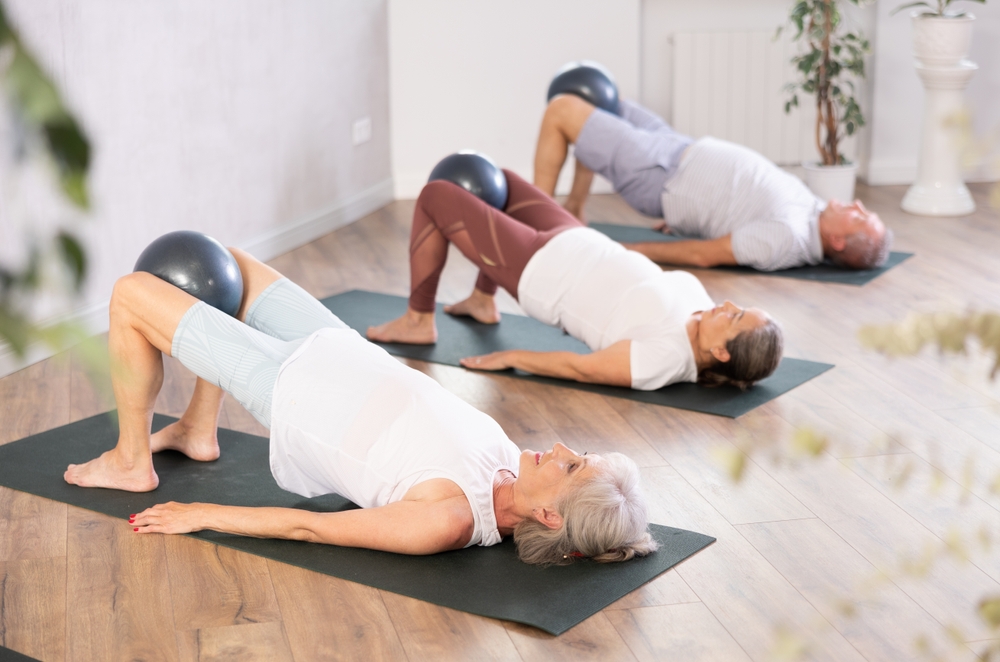
Incorporating a small pilates ball into your fitness routine provides numerous advantages rooted in Pilates principles of controlled movement and mind-body connection.
Builds Core Strength and Stability
Is pilates ball good for core? Absolutely. When you squeeze or balance with the ball during exercises, your deep core muscles including your transverse abdominis, rectus abdominis, internal obliques, and external obliques engage more intensely than during standard floor work. This comprehensive engagement creates core stability essential for everyday movement and injury prevention.
Tones Specific Muscle Groups
Pilates ball exercises excel at targeting areas like your inner thighs (adductors), glutes (gluteus maximus, medius, and minimus), and lower abs. The constant tension required to control the ball creates an effective toning stimulus that helps define and shape these muscle groups. Many exercises simultaneously work multiple areas, making your workout time more efficient.
Improves Balance and Coordination
Exercises that require you to stabilise the ball whilst moving challenge your coordination, proprioception, and body awareness. This improves your overall balance and helps develop better movement control in daily activities, reducing injury risk.
Gentle on Your Joints
The soft, forgiving surface makes soft pilates ball exercises ideal for those managing joint concerns or in rehabilitation. Unlike hard floor surfaces, the ball provides cushioning that reduces impact whilst still delivering effective resistance training.
Perfect for Home Workouts
The compact size makes this tool ideal for pilates ball exercises at home. It deflates for easy storage or travel, allowing you to maintain your fitness routine anywhere. This convenience removes common barriers to consistent exercise.
15 Best Pilates Ball Exercises
These movements progress from beginner-friendly basics to advanced challenges. What exercises can you do with pilates ball? Here are the most effective moves organised by difficulty.
Beginner Pilates Ball Exercises
These pilates ball exercises for beginners help you learn proper form whilst building initial strength and confidence.
1. Inner Thigh Squeeze
Lie on your back with knees bent and feet flat on the floor. Place the ball between your knees. Squeeze firmly for 3 seconds, then release slightly without letting it drop. Repeat 15 to 20 times. This pilates ball inner thigh exercise strengthens your adductors and activates your pelvic floor muscles, creating a stable foundation for more challenging movements.
2. Glute Bridge with Ball
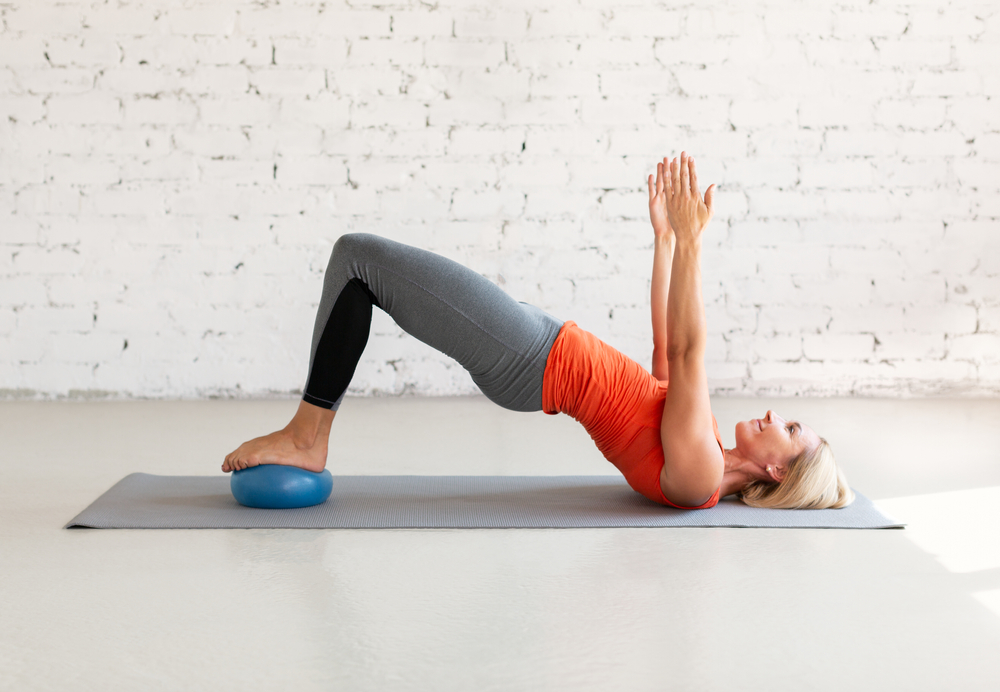
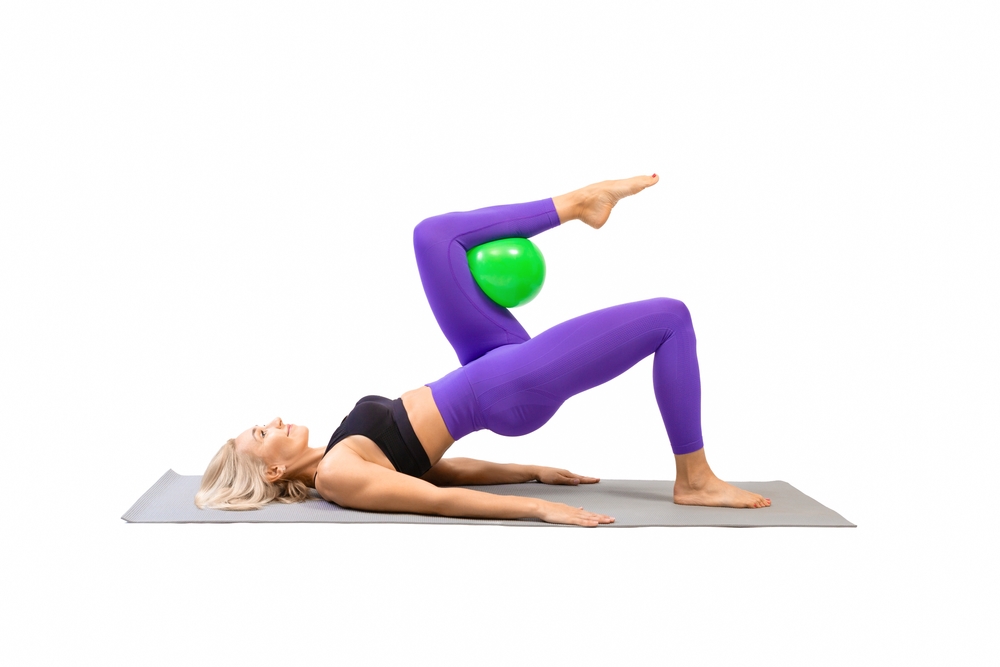
Lie on your back with the ball between your knees. Press your hips toward the ceiling whilst squeezing the ball. Hold at the top for 2 seconds, feeling your glutes and inner thighs working together. Lower slowly and repeat 12 to 15 times. This pilates ball bridge exercise targets your glutes, hamstrings, and core simultaneously whilst improving pelvic stability and hip flexor flexibility.
3. Pelvic Curl
Lie on your back with knees bent and the ball between your knees. Slowly tilt your pelvis, pressing your lower back into the mat whilst squeezing the ball. Hold for 3 seconds, then release to neutral spine. Repeat 10 to 12 times. This gentle movement strengthens your lower abs and teaches proper spinal alignment.
4. Clamshell Squeezes
Lie on your side with the ball between your ankles. Keeping your feet together, lift your top knee whilst squeezing the ball. Lower with control. Perform 12 repetitions before switching sides. This exercise targets your outer hips and glutes whilst engaging your adductors, making it excellent for pilates ball exercises for lower body.
5. Leg Lifts with Ball
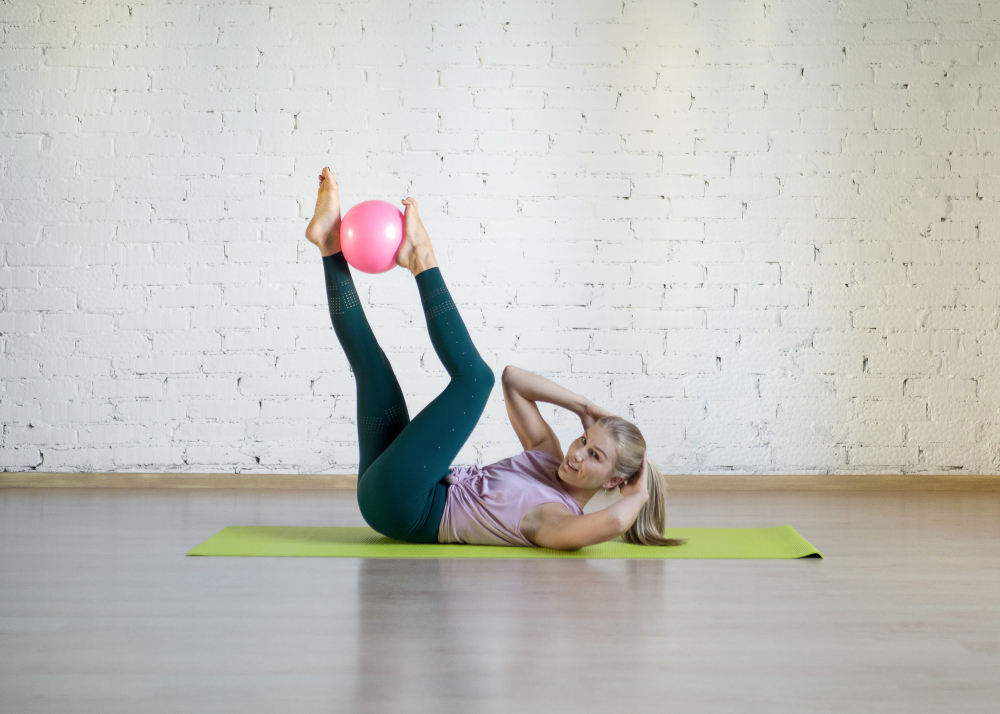
Lie on your back holding the ball between your ankles. Extend your legs toward the ceiling, then slowly lower them toward the floor whilst keeping your lower back pressed down. Raise back up and repeat 8 to 10 times. This pilates ball ab exercise challenges your lower abdominal muscles effectively whilst the ball adds resistance.
Intermediate Pilates Ball Exercises
Once you have mastered the beginner pilates ball workout, progress to these more challenging movements.
6. Ball Bicycle Crunches
Lie on your back holding the ball between your hands at chest level. Bring your right elbow and left knee together whilst extending your right leg, keeping the ball stable. Switch sides in a cycling motion, performing 12 to 15 repetitions on each side. This pilates ball oblique exercise targets your obliques and overall core whilst improving rotational strength and coordination.
7. Donkey Kicks with Ball
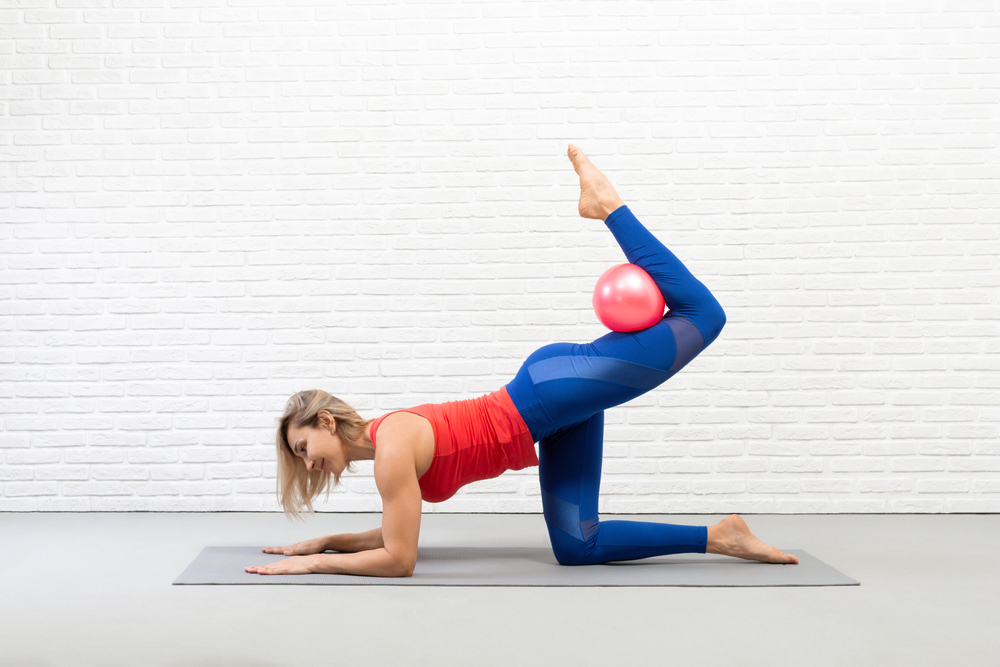
Start on all fours with the ball behind your right knee. Lift your right leg, keeping the knee bent at 90 degrees with the ball secure. Pulse your leg upward 10 to 15 times, then switch legs. This pilates ball glute exercise effectively targets and tones your gluteus maximus whilst engaging your core for stability.
8. Toe Taps
Lie on your back with the ball under your sacrum. Lift your legs so your knees align with your hips, forming a 90-degree angle. Slowly tap your left toes to the ground without moving your right leg. Bring your left leg up and tap your right toes down. Repeat for 15 to 20 taps total. This challenges your core stability intensely and counts as one of the best pilates ball exercises for abs.
9. Core Rotation
Sit on the floor with knees bent, holding the ball at your chest. Lean back slightly whilst maintaining an upright posture. Rotate your torso to one side whilst keeping your hips stable, then return to centre. Continue alternating sides for 12 to 15 repetitions. This movement targets your oblique muscles and improves rotational control using Pilates principles of flow and precision.
10. Hamstring Curl
Lie on your back with the ball between your ankles and arms by your sides. Press through your heels to lift your hips off the ground. Pull the ball toward your glutes by bending your knees, then extend back out. Lower your hips and repeat 8 to 10 times. This strengthens your hamstrings, glutes, and lower back whilst challenging balance.
Advanced Pilates Ball Exercises
These challenging exercises require good core strength and body control. Attempt them only after mastering the intermediate level.
11. Bird Dog with Ball
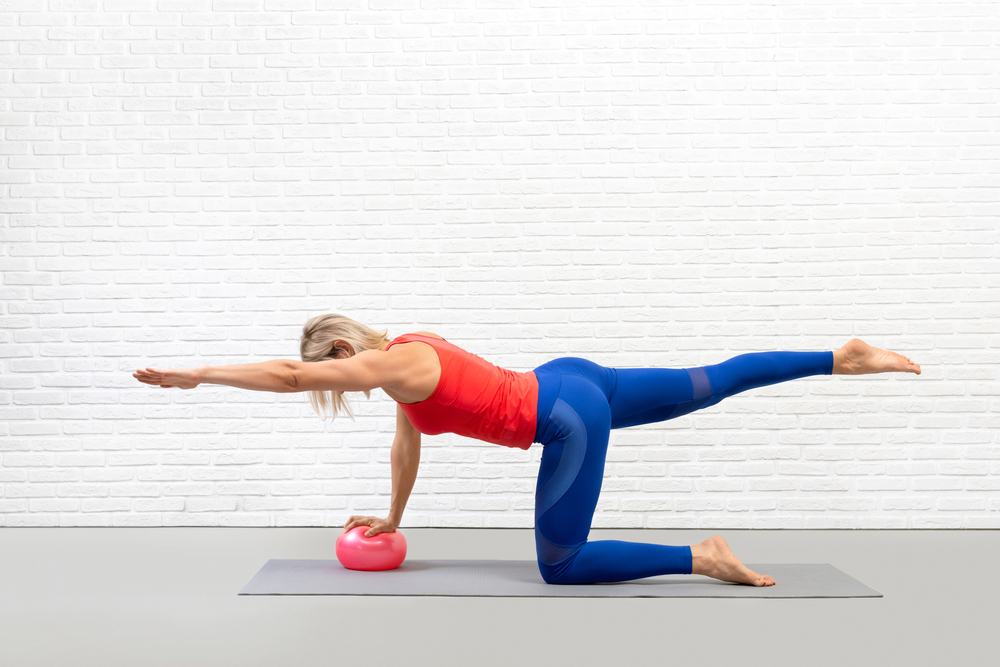
Start on all fours with the ball behind your left knee. Extend your right arm forward and left leg back, keeping the ball secure. Hold for 3 seconds maintaining neutral spine, return to start, and repeat 8 times before switching sides. This improves balance whilst strengthening your erector spinae and glutes simultaneously.
12. Side Plank with Ball
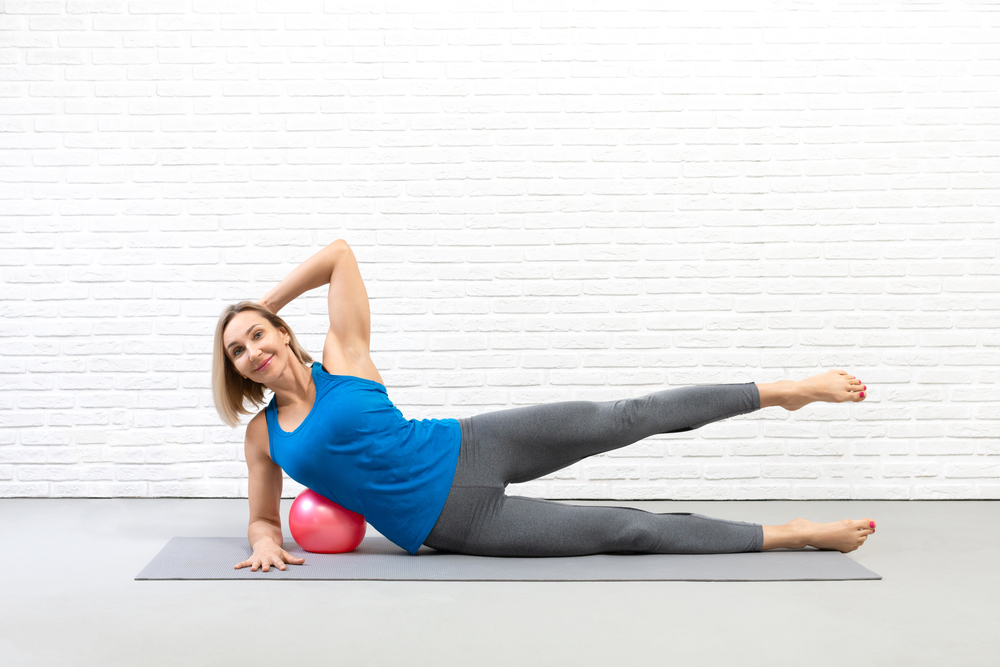
Begin in a side plank position with the ball between your ankles. Hold this position for 20 to 30 seconds, keeping your body in a straight line through spinal alignment. Switch sides and repeat. This advanced move challenges your obliques, shoulders, and inner thighs at once.
13. Single-Leg Bridge
Lie on your back with the ball under your right knee. Extend your left leg straight. Press your hips up whilst squeezing the ball with your right leg. Hold for 2 seconds at the top engaging your glutes, then lower. Complete 10 repetitions before switching legs. This intensifies the standard bridge significantly, demanding greater stability and strength.
14. Hundreds
Lie on your back and squeeze the ball between your ankles. Extend your legs straight ahead without lifting your lower back off the ground. If this feels too challenging, bring your knees into tabletop position. Lift your shoulders off the ground and bring your arms parallel to the floor. Pump your arms up and down rhythmically whilst engaging your core. Continue for 50 to 100 pumps using proper breathing technique. This classic Pilates movement builds endurance and deep core work.
15. Swan Press
Lie on your stomach with the ball beneath your palms and arms extended forward. Engage your lower abs and press into the ball to slowly lift your chest off the ground. Hold briefly at the top, then lower with control. Repeat 8 to 10 times. This pilates ball exercises for posture strengthens your back muscles and improves spinal extension.
Sample Pilates Ball Workout Routines
Easy Pilates Ball Exercises Routine (15 minutes)
- Inner thigh squeeze: 2 sets of 20 reps.
- Glute bridge with ball: 2 sets of 15 reps.
- Pelvic curl: 2 sets of 12 reps.
- Clamshell squeezes: 2 sets of 12 reps each side.
- Rest 30 seconds between sets.
Intermediate Small Pilates Ball Workout (20 minutes)
- Ball bicycle crunches: 3 sets of 15 reps each side.
- Donkey kicks: 3 sets of 15 reps each leg.
- Toe taps: 3 sets of 20 reps.
- Core rotation: 3 sets of 15 reps.
- Hamstring curl: 3 sets of 10 reps.
- Rest 30 seconds between sets.
Advanced Pilates Ball Core Strength Routine (25 minutes)
- Perform all 15 exercises in circuit format.
- Complete each exercise for 45 seconds.
- Rest 15 seconds between exercises.
- Complete 2 full rounds.
How to Use a Pilates Ball: Expert Tips
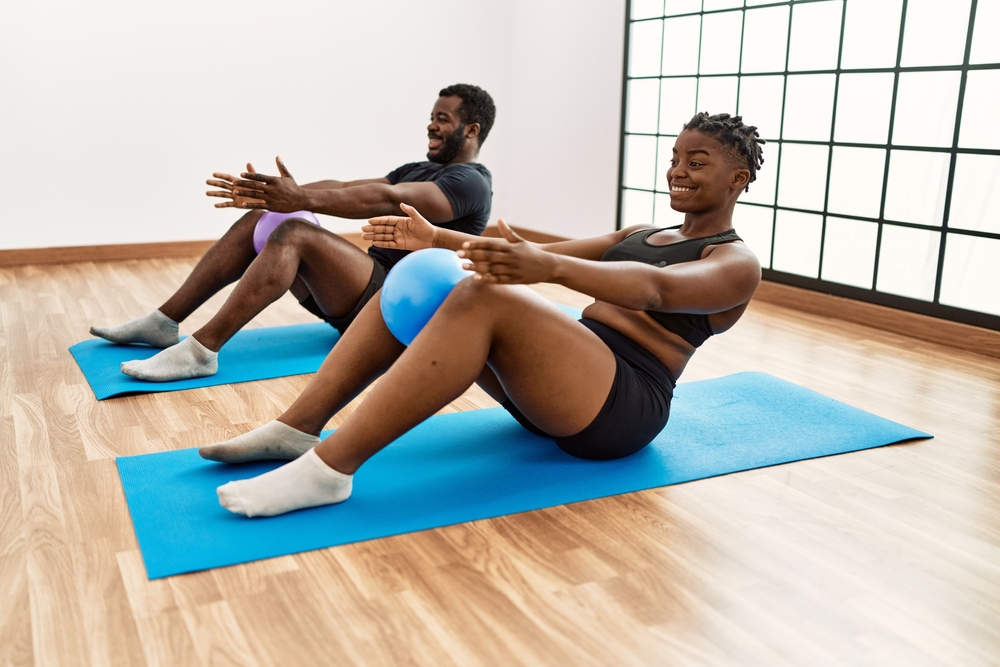
Prioritise Form Over Speed: Controlled movements with proper technique deliver better results than rushing through repetitions. Focus on precision and engagement rather than quantity, following Pilates principles of concentration and control.
Maintain Consistent Breathing: Never hold your breath during exercises. Exhale during the effort phase (squeeze, lift, press) and inhale during the release. This breath work supports your movements and prevents unnecessary tension.
Progress Gradually: If you are new to these exercises, begin with the beginner routine and master those movements before advancing. Building a solid foundation prevents injury and ensures long-term success with mini pilates ball exercises.
Check Your Ball Firmness: Your 25cm pilates ball should feel firm but still compress when squeezed. If it becomes too soft or too hard, adjust the air pressure through the air valve for optimal resistance and comfort.