

Blog
Weighted Hula Hoop Workout: 10 Effective Exercises for Weight Loss and Core Strength


A weighted hula hoop workout combines cardiovascular exercise with core strengthening in an engaging, low-impact format that delivers genuine results. Unlike childhood hula hoops designed purely for play, weighted fitness hoops create resistance that challenges your muscles whilst burning significant calories.
This increasingly popular fitness trend works for people of all ages and fitness levels, from complete beginners to advanced athletes seeking variety in their training. Whether you want to lose weight, tone your midsection, or simply enjoy exercise that feels more like play than work, weighted hula hooping offers an accessible path to your fitness goals.
This guide covers 10 effective weighted hula hoop exercises, explains the science behind the results, and provides realistic expectations about what you can achieve through consistent practice.
The Science Behind Weighted Hula Hoop Results
Weighted hula hoops typically weigh between 1kg and 3kg, significantly heavier than standard hoops. This added mass creates resistance that engages your core muscles more intensely whilst requiring continuous rotational movement that elevates your heart rate.
Research confirms that regular hula hooping burns approximately 200 to 300 calories per 30-minute session, comparable to brisk walking or light jogging. The weighted variety increases this calorie burn through greater muscle activation and the increased effort required to maintain momentum and spinning.
The continuous waist rotation specifically targets your obliques, abdominal muscles, and lower back, creating the toned midsection many people seek. Additionally, the cardiovascular component supports overall fat burning and improved metabolism when combined with balanced nutrition.
Weighted Hula Hoop Benefits
Understanding the complete range of benefits helps maintain motivation throughout your fitness journey.
Effective Calorie Burning
A 30-minute weighted hula hoop cardio workout burns 200 to 300 calories through sustained aerobic exercise. This supports weight loss goals without the high-impact stress on joints that running or jumping exercises create. The low-impact nature makes weighted hooping accessible for seniors, older adults, and those over 50 who want effective exercise without joint strain.
Core Strengthening and Toning
The continuous rotational movement engages your entire core, including your abs, obliques, and lower back muscles. This sustained muscle activation builds genuine core strength over time, leading to improved posture and a more defined waistline. Many people notice their stomach becoming more toned and their love handles reducing with consistent practice.
Improved Coordination and Balance
Maintaining hoop momentum requires coordination between your upper and lower body. This improves overall body awareness, rhythm, and balance—skills that transfer to other physical activities and daily movement.
Convenience for Home Workouts
Weighted hula hoop exercises require minimal space and no additional equipment. This convenience supports consistent practice, which matters more than occasional intensive sessions. You can exercise indoors whilst watching television, listening to podcasts, or enjoying music.
Enjoyable Movement
The rhythmic, almost meditative quality of hooping makes exercise feel less like work and more like enjoyable movement. This psychological benefit increases adherence to regular workouts, which ultimately determines long-term success.
Weighted vs Regular Hula Hoop
For fitness purposes, weighted hoops offer several advantages over lightweight standard hoops. The added weight makes them easier to control and maintain rotation, particularly for beginners learning proper technique. Regular lightweight hoops require faster hip movement and greater skill to keep spinning.
Weighted hoops deliver superior results for weight loss and core strengthening because the resistance increases muscle engagement and calorie burn. However, regular hoops work well for developing coordination and can be incorporated into more dynamic, dance-style workouts.
Smart hula hoops use a different mechanism with a weighted ball on a track around your waist. Whilst convenient, traditional weighted hoops provide more natural movement patterns and authentic core engagement through actual hip movement.
For beginners, choose a hoop weighing 1kg to 1.5kg. Experienced users can progress to 2kg to 3kg hoops for increased challenge as their core strength develops.
10 Best Weighted Hula Hoop Exercises
1. Basic Waist Hooping
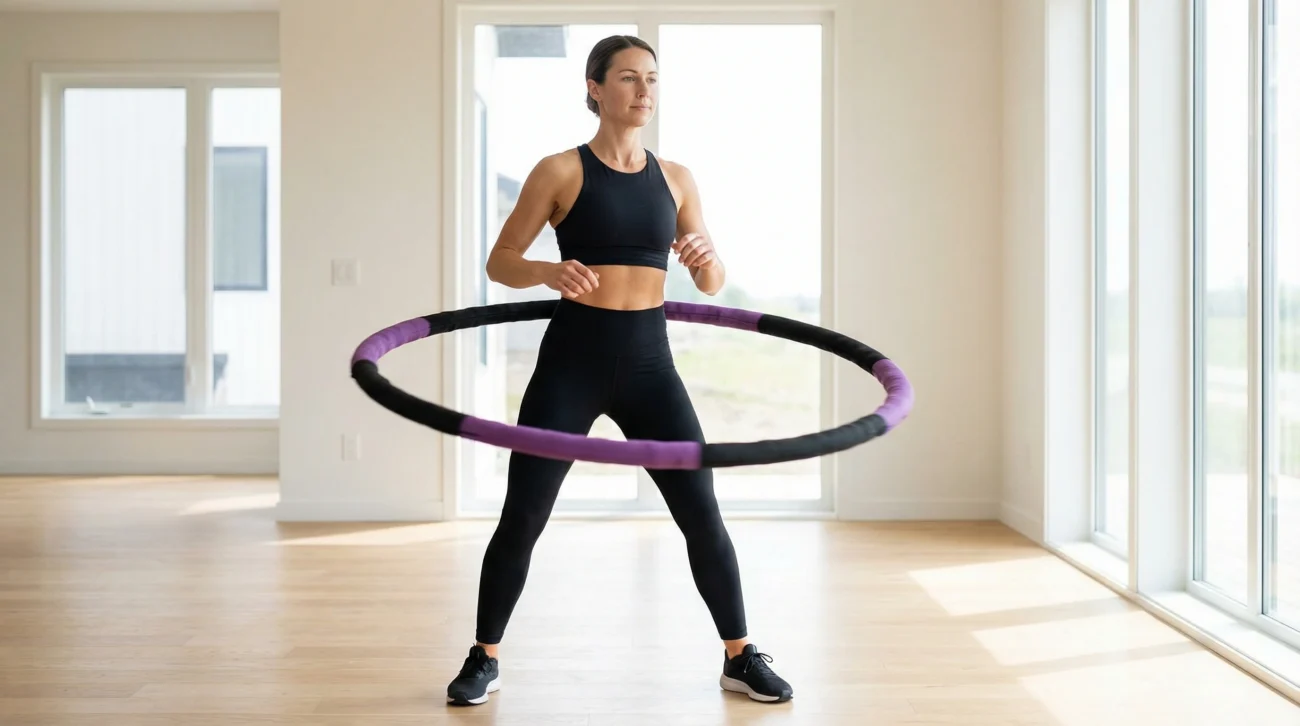
Muscles targeted: Core, obliques, lower back
Stand with feet shoulder-width apart and one foot slightly ahead. Position the hoop against your lower back and give it a firm spin. Rock your weight forward and backward rather than circling your hips—the circular motion comes from the hoop, not your body. Keep your core engaged and maintain steady rhythm.
Start with 2 to 3 minutes, building to 10 to 15 minutes as stamina improves. This foundational exercise burns the most calories when performed continuously.
2. Wide-Stance Hooping
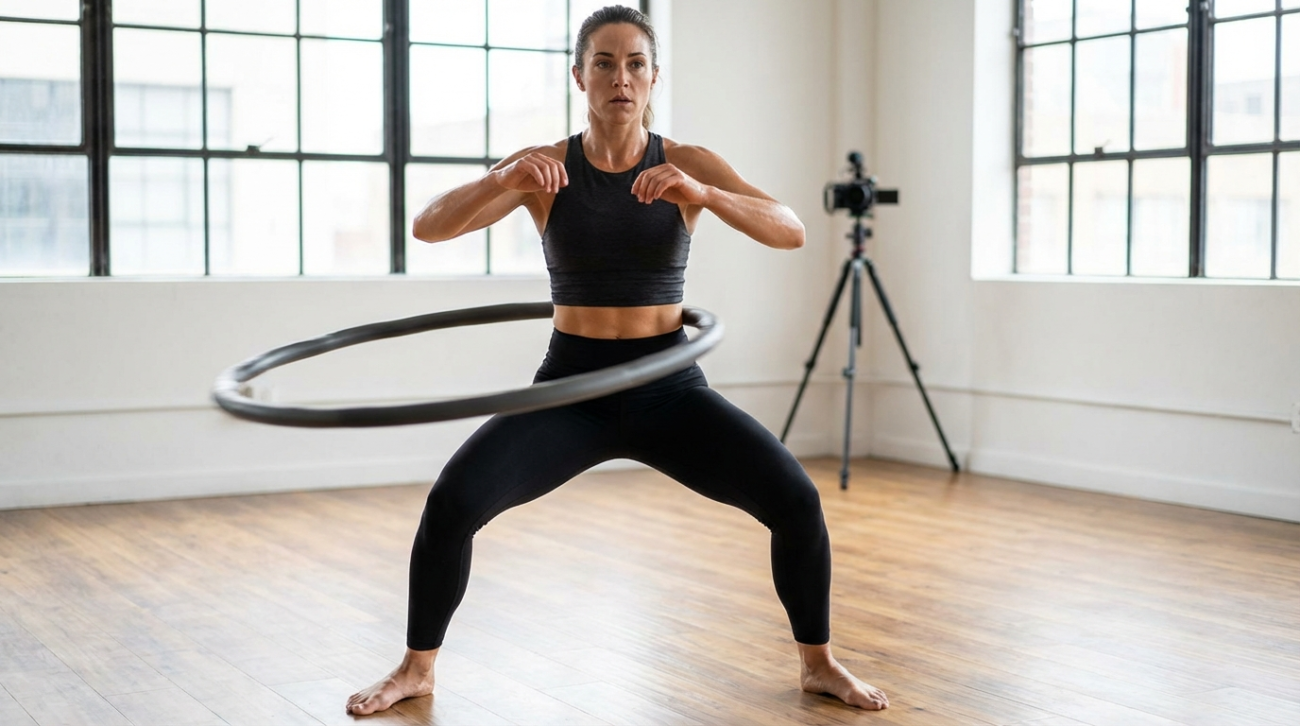
Muscles targeted: Core, inner thighs, glutes
Position your feet wider than shoulder-width apart whilst maintaining hoop rotation. The wider stance engages your inner thighs and glutes more intensely whilst challenging your balance. Practice for 2 to 5 minutes.
3. Hoop Squats
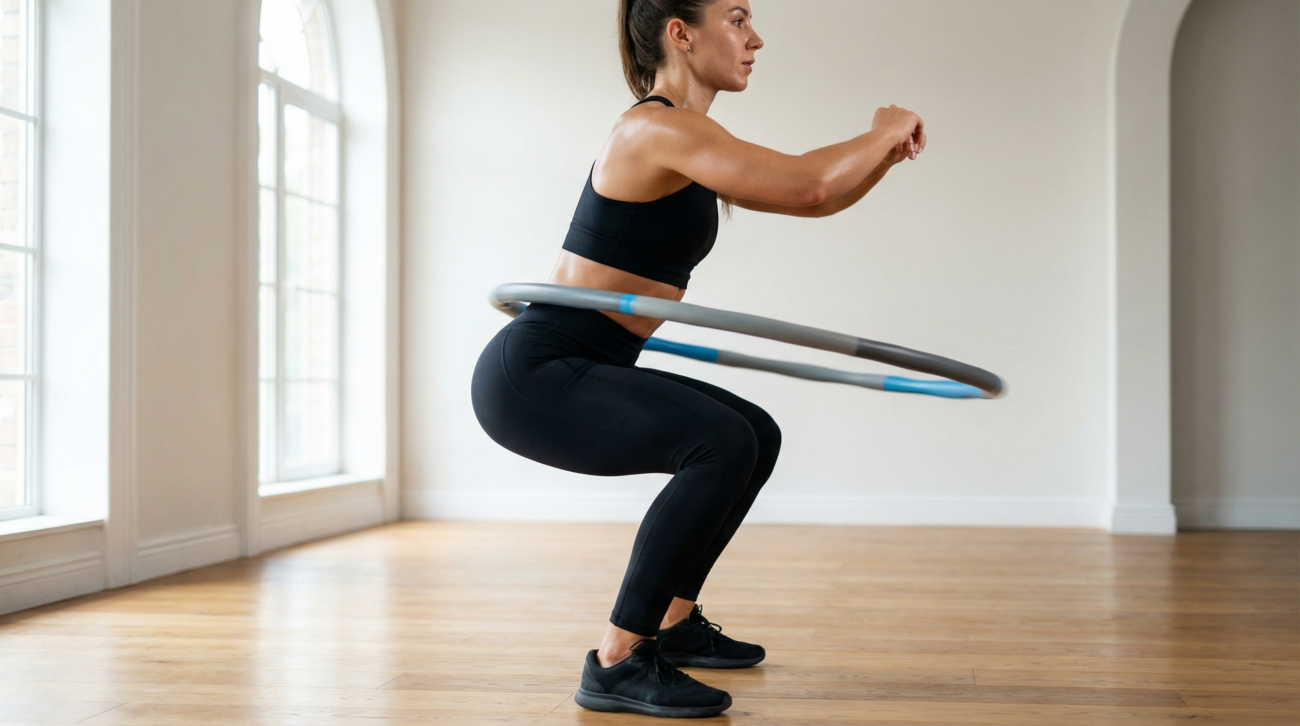
Muscles targeted: Quads, glutes, hamstrings, core
Maintain hoop rotation whilst slowly lowering into a squat position. Keep your chest lifted and knees aligned with toes. Rise back to standing whilst continuing rotation. Perform 10 to 15 squats for 2 to 3 sets.
This exercise combines lower body strengthening with core work for comprehensive conditioning.
4. Side Step Hooping
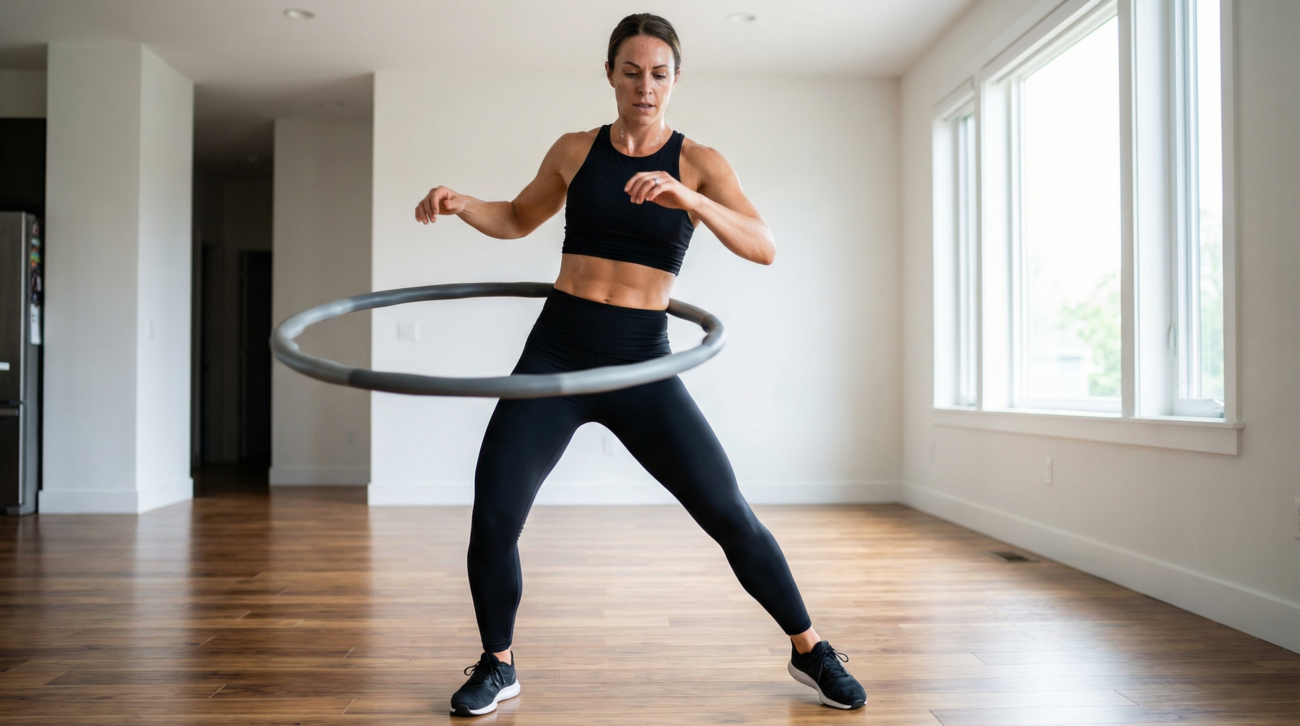
Muscles targeted: Core, hip abductors, calves
Keep the hoop spinning whilst taking small steps side to side. Step right for 5 to 10 steps, then reverse direction. Continue for 3 to 5 minutes.
The combination of hooping and lateral stepping significantly elevates heart rate for enhanced calorie burn.
5. Forward and Backward Walking
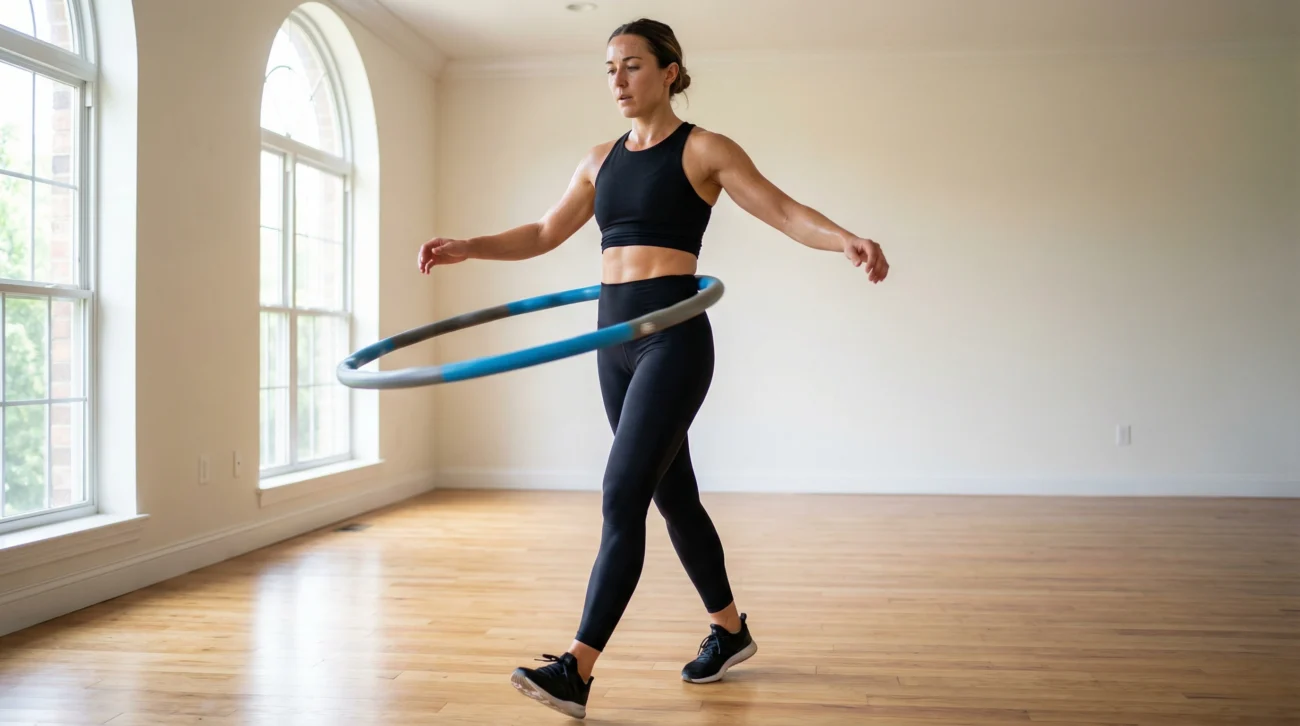
Muscles targeted: Core, legs, coordination
Maintain hoop rotation whilst walking slowly forward for several steps, then backward. This advanced movement challenges coordination whilst increasing workout intensity. Practice for 2 to 4 minutes after mastering basic waist hooping.
6. Arm Raises with Hoop
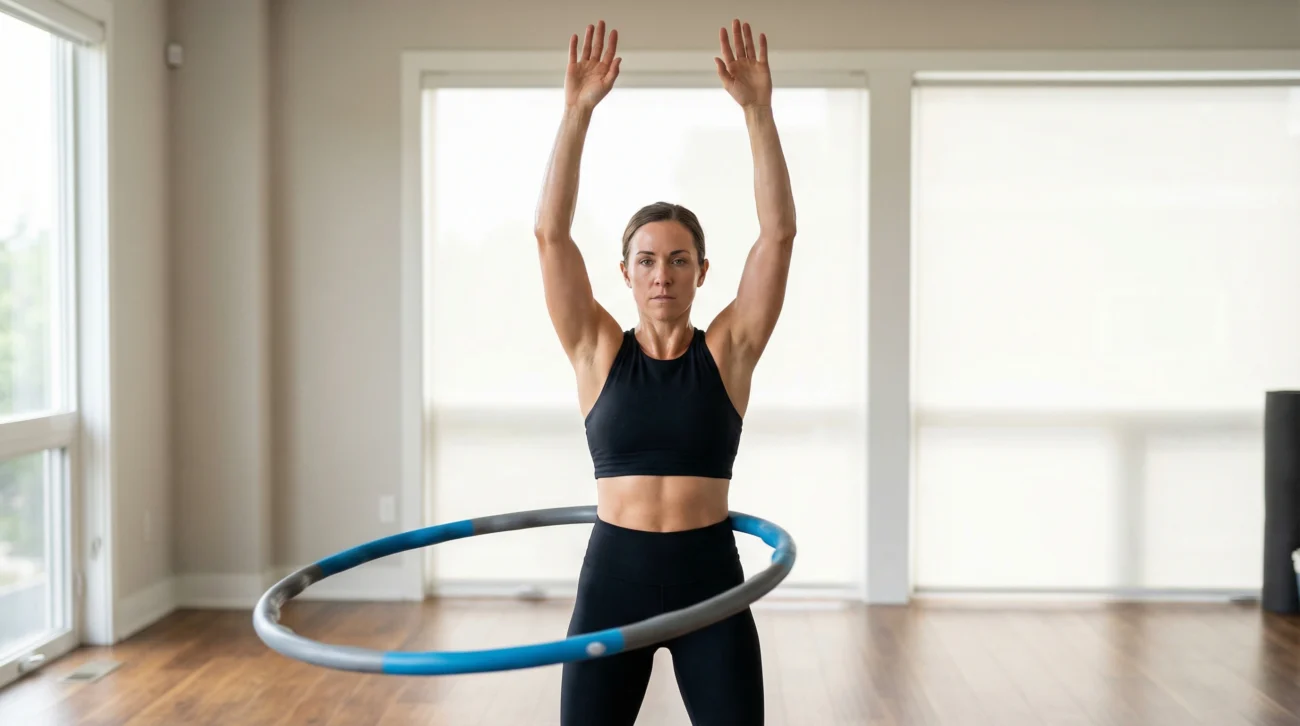
Muscles targeted: Core, shoulders, arms
Whilst hooping at your waist, raise your arms overhead, hold for 10 seconds, then lower. Perform 10 to 15 raises.
The arm movement challenges your balance and engages upper body muscles, creating a full body workout experience.
7. Hoop Lunges
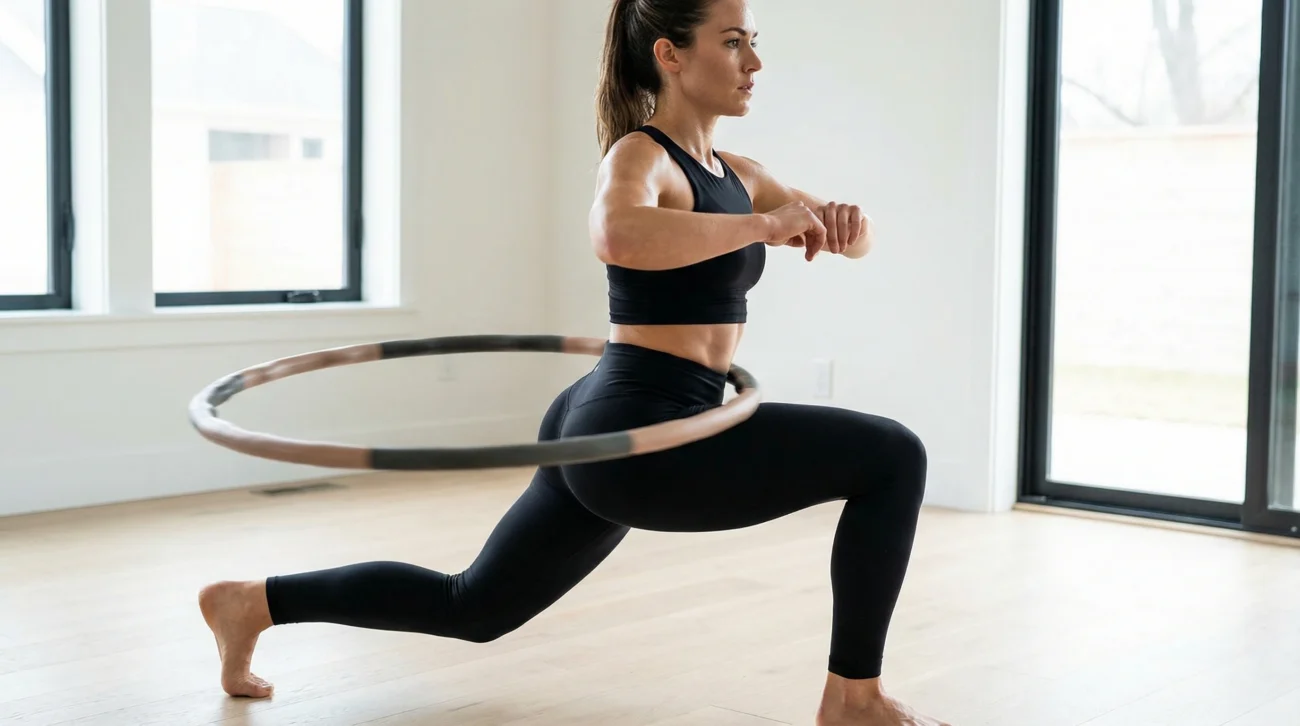
Muscles targeted: Quads, glutes, hamstrings, core
Maintain rotation whilst stepping into alternating forward lunges. Keep your front knee aligned over your ankle and lower until your thigh is roughly parallel to the floor. Perform 8 to 12 lunges per leg for 2 sets.
This advanced exercise requires good hooping control and balance.
8. Overhead Hoop Arm Workout
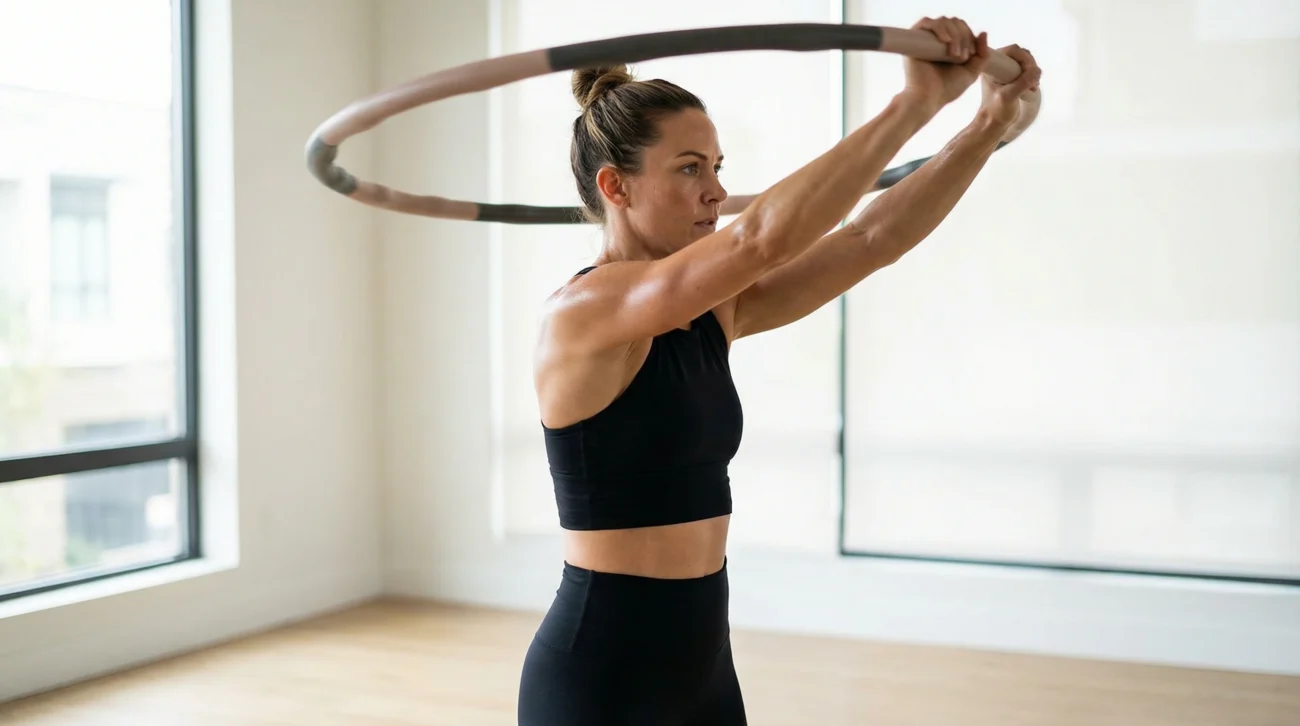
Muscles targeted: Shoulders, arms, upper back
Hold the hoop with both hands and perform arm circles, bringing it overhead and back down in continuous circular motion. Complete 15 to 20 circles in each direction for 2 to 3 sets.
Include this exercise between waist hooping intervals to create a comprehensive whole body workout.
9. Hoop Twists
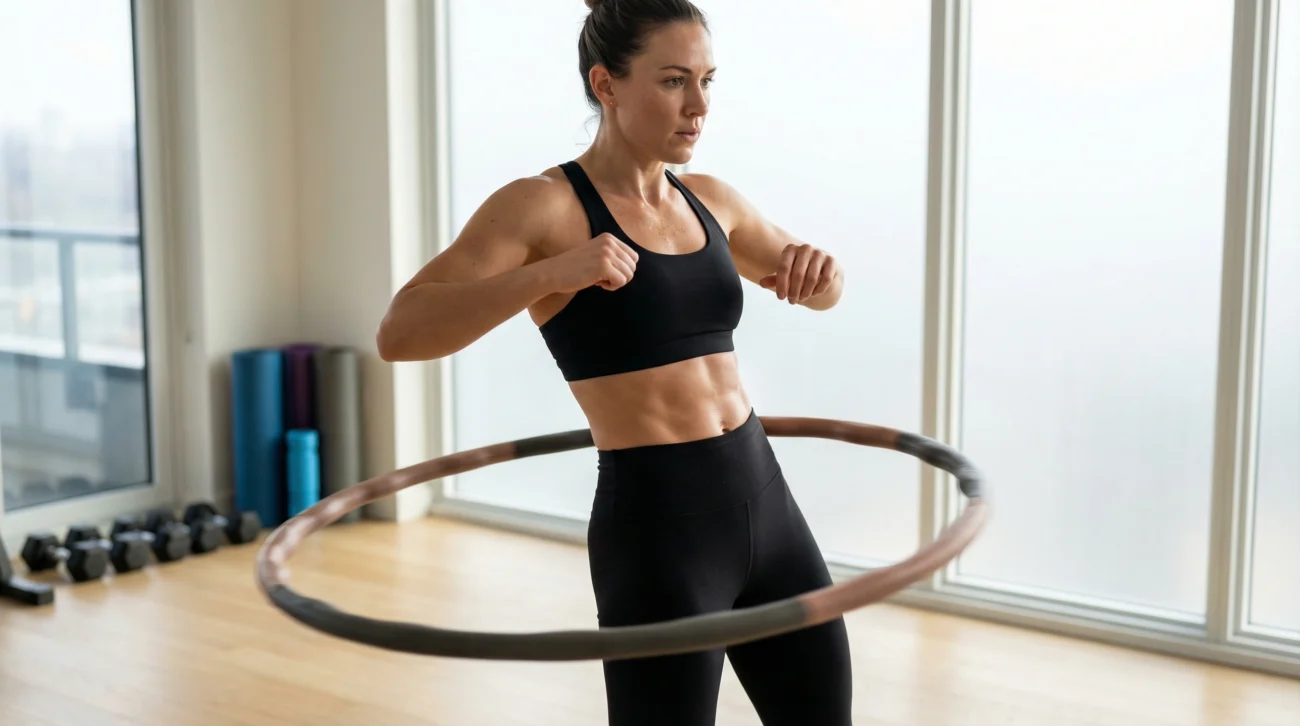
Muscles targeted: Obliques, entire core
Stand with the hoop around your waist and twist your torso side to side, keeping the hoop spinning. Engage your obliques deliberately with each twist. Continue for 2 to 3 minutes.
This movement intensifies oblique engagement for enhanced waist toning and ab definition.
10. Cardio Interval Hooping
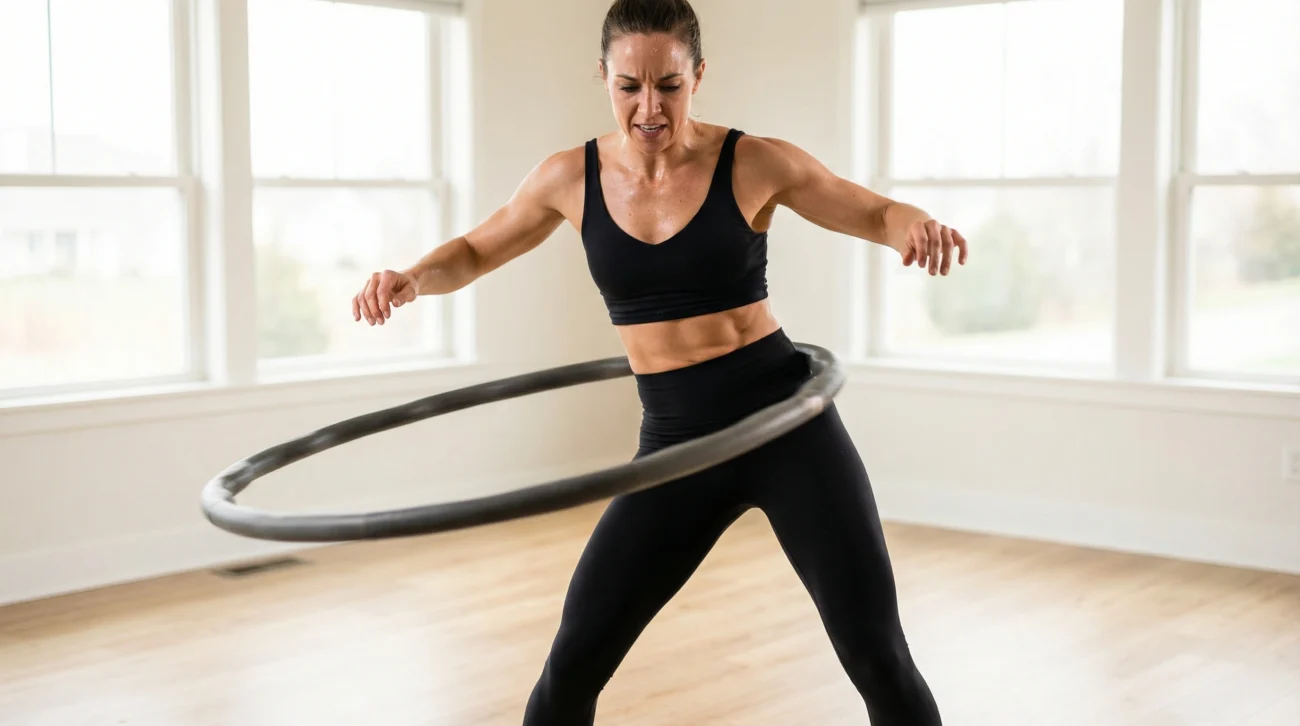
Muscles targeted: Full body, cardiovascular system
Alternate between 1 minute of fast-paced hooping with energetic hip movement and 30 seconds of slower, controlled hooping. Repeat this interval pattern for 10 to 15 minutes.
This high-intensity approach maximises calorie burn and cardiovascular benefits for accelerated weight loss results.
Sample Workout Routines
Beginner Routine (15 minutes)
This routine suits those new to weighted hula hooping or returning to exercise after a break.
- Warm-up with gentle hip circles (2 minutes)
- Basic waist hooping (5 minutes)
- Rest (1 minute)
- Wide-stance hooping (3 minutes)
- Overhead hoop arm workout (2 minutes)
- Cool-down stretching (2 minutes)
Practice 3 to 4 times weekly, allowing rest days between sessions.
Intermediate Routine (25 minutes)
Progress to this routine once you can maintain continuous hooping for 5 minutes comfortably.
- Warm-up (2 minutes)
- Basic waist hooping (5 minutes)
- Hoop squats, 3 sets
- Side step hooping (4 minutes)
- Arm raises with hoop, 2 sets
- Cardio interval hooping (8 minutes)
- Cool-down (3 minutes)
Practice 4 to 5 times weekly.
Advanced Routine (35 minutes)
This intense routine challenges experienced hoopers seeking maximum results.
- Warm-up (3 minutes)
- Cardio interval hooping (10 minutes)
- Hoop lunges, 3 sets
- Forward and backward walking (5 minutes)
- Hoop squats, 3 sets
- Hoop twists (4 minutes)
- Basic waist hooping (7 minutes)
- Cool-down (3 minutes)
Practice 5 to 6 times weekly.
Session Duration and Frequency
For optimal weight loss and fitness improvement, aim for 20 to 30 minute sessions, 4 to 5 times weekly. This frequency provides sufficient cardiovascular exercise and muscle engagement whilst allowing adequate recovery time between workouts.
Beginners should start with shorter 10-minute sessions, 3 times weekly. As your core strength develops and your body adapts to the weighted resistance, gradually increase duration to 20 minutes, then eventually 30 minutes per session. Progression should feel natural rather than forced.
Daily practice is possible for experienced users who have built adequate core conditioning. However, most people achieve better long-term results with 4 to 5 weekly sessions. Rest days allow your muscles to recover and strengthen, preventing the fatigue that leads to poor form and potential injury.
Results Timeline
Consistency determines results more than session length. Most people notice improved core strength and better coordination within 2 to 3 weeks of regular practice. Your ability to maintain the hoop spinning for longer periods serves as an early indicator of progress.
Visible physical changes typically appear within 6 to 8 weeks when combining regular weighted hula hoop workouts with balanced nutrition. These changes include a more defined waistline, stronger obliques, improved posture from enhanced core stability, and reduced belly fat as overall body composition improves.
Safety Considerations
Weighted hula hoop exercise is safe for most people when performed with proper technique and appropriate equipment. Some users experience temporary bruising initially as their body adapts to the weighted contact. This typically resolves within 1 to 2 weeks of regular practice.
Choose an appropriate weight for your fitness level—1kg to 1.5kg for beginners, progressing to heavier options as strength develops. Consult your healthcare provider before starting if you have back problems, are pregnant, or have had recent abdominal surgery.
Stop exercising if you experience sharp pain, dizziness, or unusual discomfort. These symptoms may indicate improper form or excessive intensity requiring adjustment.
Frequently Asked Questions
Yes. A 30-minute session burns 200 to 300 calories through sustained cardiovascular activity. Combined with balanced nutrition, regular practice contributes effectively to weight loss goals. The increased muscle mass from core strengthening also boosts metabolism for continued calorie burn.
Weighted hooping burns calories and strengthens core muscles, contributing to overall fat loss including the midsection. Whilst spot reduction is not possible, consistent cardio exercise combined with proper nutrition reduces body fat throughout, including the belly and love handles.
For fitness purposes, weighted hoops offer easier control for beginners, increased muscle engagement, and higher calorie burn. They are generally more effective for weight loss and core strengthening than lightweight standard hoops.
The primary muscles targeted include your abdominals, obliques, and lower back. Secondary engagement includes hip muscles, glutes, and legs. Adding the exercises above incorporates shoulders, arms, and upper back for comprehensive whole body conditioning.
Yes. Beginners should start with lighter hoops (1kg to 1.5kg), shorter sessions (10 minutes), and focus on mastering basic technique before progressing. The low-impact nature makes it accessible for various fitness levels and ages.
Start Your Weighted Hula Hoop Journey Today
A weighted hula hoop workout provides effective, enjoyable exercise that supports weight loss, builds core strength, and improves overall fitness. The low-impact nature makes it accessible for women, men, and people of all ages whilst still delivering genuine transformation results.
Begin with basic waist hooping, master the fundamental technique, and gradually incorporate additional exercises as your skill and stamina develop. Consistency produces results—regular 20-minute sessions outperform occasional intensive workouts every time.
Ready to experience these benefits yourself? Explore our weighted hula hoop for fitness adults and begin your transformation today.

About Jessica Thompson
As a content creator for Romix, I’m Jessica Thompson, and I’m here to bring you the latest insights, tips, and trends to help you make the most of your active lifestyle. At Romix, we’re all about combining functionality with style, whether it's through our innovative gym accessories, travel gear, or outdoor essentials. I love diving into the details of our products, sharing how they can enhance your everyday adventures. My goal is to create content that not only informs but also inspires you to live a healthier, more active life with Romix by your side.
View all posts by Jessica Thompson