

Blog
10 Easy Yoga Poses for Beginners: Start Your Practice Today


Starting yoga can feel intimidating when you see experienced practitioners flowing through complex poses. The good news? You do not need to be flexible, strong, or graceful to begin. Is yoga good for beginners? Absolutely. These 10 basic yoga poses provide the perfect foundation for beginners, helping you build strength, flexibility, and confidence from your very first practice.
Each pose in this guide includes clear instructions, easier modifications for those just starting out, and guidance on common mistakes to avoid. Whether you practice beginner yoga at home or attend classes, mastering these beginner yoga poses creates a solid foundation for your yoga journey. You will discover that yoga is less about achieving perfect positions and more about connecting with your body, breathing mindfully, and moving with intention.
Getting Started: What Beginners Need to Know
Before diving into the poses, understanding a few basics sets you up for success when learning how to start yoga at home for beginners.
How Long to Hold Each Pose
How long should beginners hold yoga poses? As a beginner, hold each pose for 30 to 60 seconds. This duration allows your muscles to adapt whilst preventing fatigue. Focus on breathing steadily rather than counting seconds. If a pose feels too intense, come out earlier and rest.
Breathing Basics
Breathe slowly through your nose during poses. Never hold your breath. If you find yourself gasping or breathing through your mouth, ease out of the pose slightly. Your breath guides you—when breathing becomes strained, you have gone too far.
Listen to Your Body
Yoga should challenge you gently, never cause sharp pain. A stretching sensation is normal, but stop immediately if you feel pinching, shooting pain, or joint discomfort. These gentle yoga poses respect your body’s current abilities whilst encouraging gradual progress.
What Do I Need to Start Yoga at Home?
What do I need to start yoga at home? You need only a yoga mat to begin practising at home. A quality mat provides cushioning and prevents slipping during poses. Our non-slip yoga mats offer the perfect foundation for your home practice. Comfortable clothing that allows free movement completes your setup.
10 Essential Yoga Poses for Beginners
Here are the best yoga poses to start with, organised from easiest to moderate difficulty.
1. Cat-Cow Pose (Super Easy)
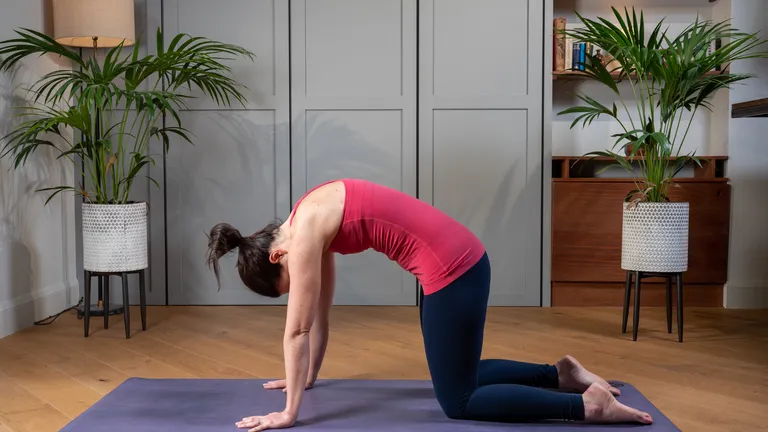
This gentle flowing movement warms up your spine and helps you connect breath with movement, making it one of the easiest yoga poses for complete beginners.
How to do it: Start on hands and knees with wrists under shoulders and knees under hips. Inhale, drop your belly towards the floor whilst lifting your head and tailbone (Cow). Exhale, round your spine upward like an angry cat whilst tucking your chin and tailbone. Flow between these positions for 1 minute.
Benefits: Warms the spine, improves flexibility, releases tension in back and neck.
Modification: Move very slowly and reduce the range of motion if you have back sensitivity.
Common mistake: Moving too quickly. Synchronise one breath with one movement for mindful practice.
2. Child’s Pose (Super Easy)
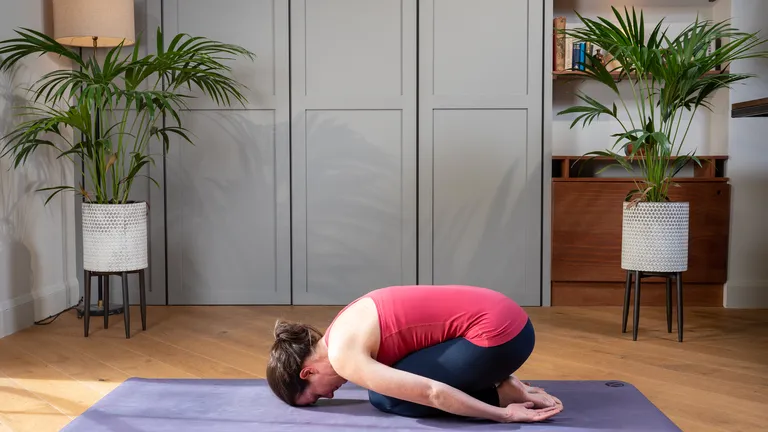
What is the easiest yoga pose? Child’s pose ranks among the simplest yoga poses, allowing you to pause and reconnect with your breath during practice.
How to do it: Kneel on your mat, sit back on your heels, and fold forward, extending your arms ahead or alongside your body. Rest your forehead on the mat and breathe deeply.
Benefits: Gently stretches hips and thighs, calms the mind, relieves stress and tension. Perfect for relaxing yoga poses sessions.
Modification: Place a cushion between your bottom and heels if you cannot sit fully back. Widen your knees if tight hips prevent you from folding forward comfortably.
Common mistake: Holding tension in shoulders. Actively relax your shoulders away from your ears.
3. Downward Facing Dog (Moderate)
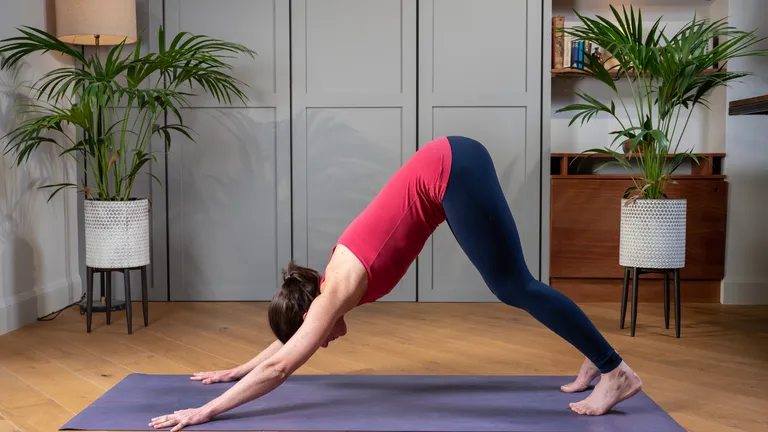
This fundamental yoga position strengthens your entire body whilst stretching multiple muscle groups, making it essential for yoga for flexibility beginners.
How to do it: From hands and knees, tuck your toes under and lift your hips toward the ceiling. Press firmly through your hands and feet, creating an inverted V-shape with your body. Hold for 30 to 60 seconds.
Benefits: Strengthens arms and shoulders, stretches hamstrings and calves, energises the body.
Modification: Bend your knees generously if hamstrings feel tight. Focus on lengthening your spine rather than straightening legs. Place hands on blocks for less intensity.
Common mistake: Rounding the back. Keep your spine long even whilst maintaining bent knees.
4. Forward Fold (Easy)
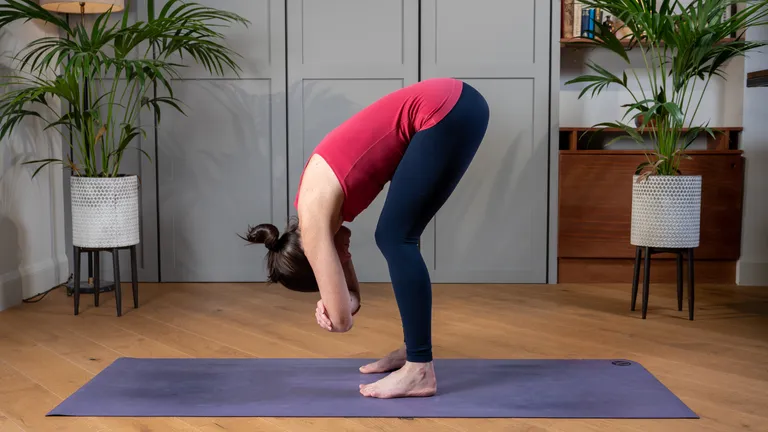
This standing stretch releases tension in your back whilst calming your mind, making it excellent for yoga poses to relieve stress.
How to do it: Stand with feet hip-width apart and a slight knee bend. Hinge at your hips and fold forward, letting your upper body hang heavy. Rest hands on your legs, feet, or floor. Hold for 1 minute.
Benefits: Stretches hamstrings and spine, relieves back tension, calms nervous system.
Modification: Bend knees as much as needed to release lower back strain. Place hands on blocks or your shins rather than reaching for the floor.
Common mistake: Locking knees. Always maintain a soft bend to protect your joints and improve alignment.
5. Low Lunge (Moderate)
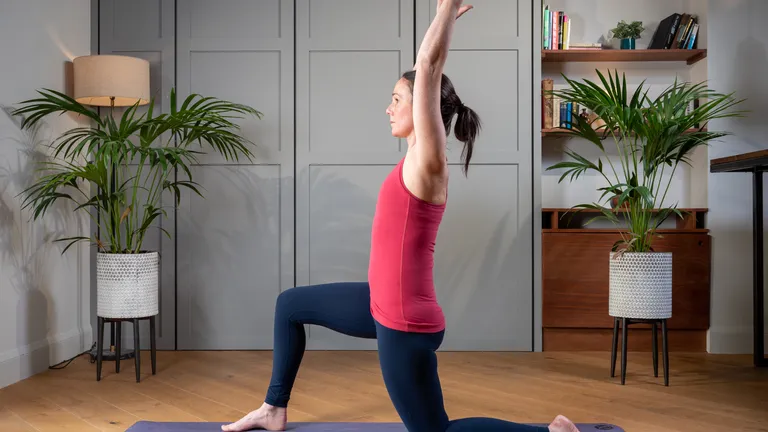
This pose opens tight hips whilst building strength in your legs, perfect for simple yoga stretches for beginners.
How to do it: From hands and knees, step your right foot forward between your hands. Keep your left knee on the mat and sink your hips forward. Bring your hands to your right thigh or extend overhead. Hold for 30 to 60 seconds each side.
Benefits: Stretches hip flexors and thighs, strengthens legs, improves balance.
Modification: Place a cushion under your back knee for comfort. Keep hands on your front thigh instead of raising arms overhead.
Common mistake: Allowing the front knee to travel past your toes. Keep your front shin vertical.
6. Warrior 2 (Moderate)
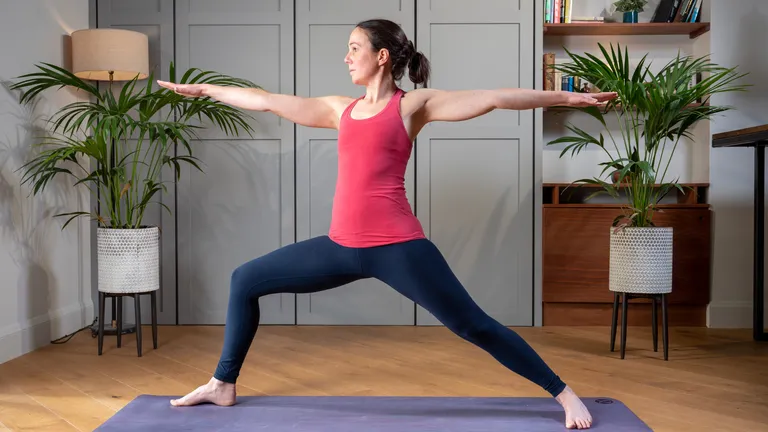
This powerful standing pose builds strength whilst improving concentration and stamina, essential for beginner friendly yoga poses routines.
How to do it: Stand with legs wide apart. Turn your right foot to face the short edge of your mat and bend your right knee over your ankle. Extend arms parallel to the floor, gaze over your front hand. Hold for 30 to 60 seconds each side.
Benefits: Strengthens legs and core, opens hips and chest, builds stamina and focus.
Modification: Reduce your stance width if maintaining the position feels too demanding. Shorten your hold time to 20 to 30 seconds initially.
Common mistake: Leaning forward. Keep your torso upright directly over your hips for proper posture.
7. Triangle Pose (Moderate)
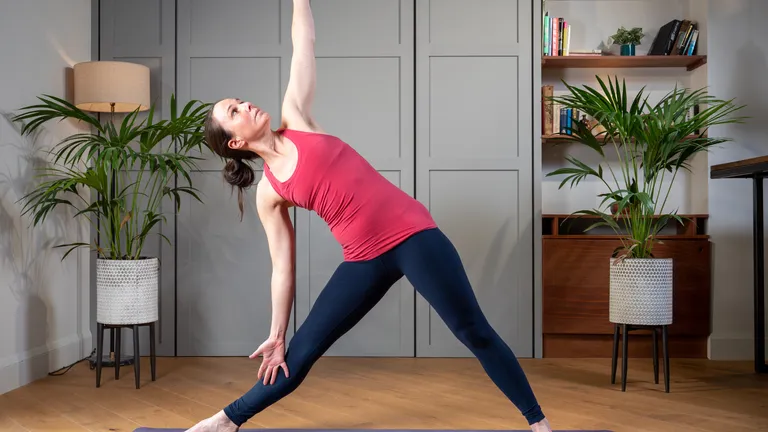
This standing pose stretches your entire side body whilst improving stability and balance.
How to do it: From a wide stance, turn your right foot out and left foot slightly in. Extend arms wide, then reach your right hand down toward your shin, ankle, or floor. Extend your left arm toward the ceiling. Hold for 30 to 60 seconds each side.
Benefits: Stretches legs and spine, opens chest and shoulders, improves balance.
Modification: Place your bottom hand on a block rather than reaching all the way down. Keep both knees slightly bent for more stability.
Common mistake: Collapsing the chest forward. Keep both sides of your torso equally long.
8. Puppy Pose (Easy)
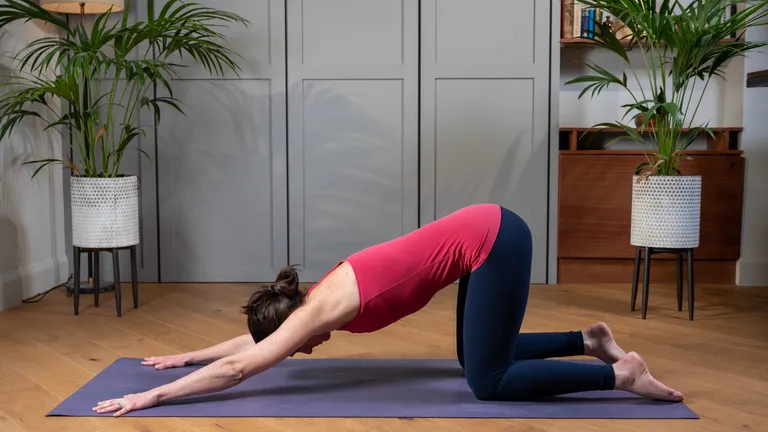
This gentle stretch targets tight shoulders whilst providing a calming effect, ideal for morning yoga for beginners.
How to do it: From hands and knees, walk your hands forward whilst keeping your hips over your knees. Lower your chest toward the mat and rest your forehead down. Hold for 1 minute.
Benefits: Stretches spine and shoulders, releases upper back tension, calms the mind.
Modification: Place a folded blanket under your forehead if it does not reach the floor comfortably. Reduce the distance you walk your hands forward.
Common mistake: Sitting back toward your heels. Keep hips directly above knees for proper alignment.
9. Bridge Pose (Moderate)
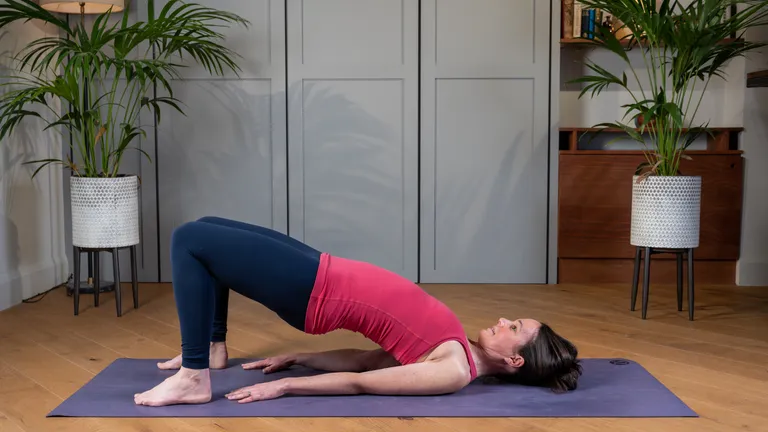
This gentle backbend strengthens your back whilst opening your chest and hips through controlled movement.
How to do it: Lie on your back with knees bent and feet flat on the floor hip-width apart. Press through your feet to lift your hips toward the ceiling. Keep your arms alongside your body or clasp hands beneath you. Hold for 30 to 60 seconds.
Benefits: Strengthens back and glutes, stretches chest and hip flexors, energises the body.
Modification: Place a block under your sacrum for supported bridge. Keep your arms on the floor rather than clasping hands underneath.
Common mistake: Letting knees splay outward. Keep knees hip-width apart throughout for stability.
10. Wide-Legged Forward Fold (Easy)
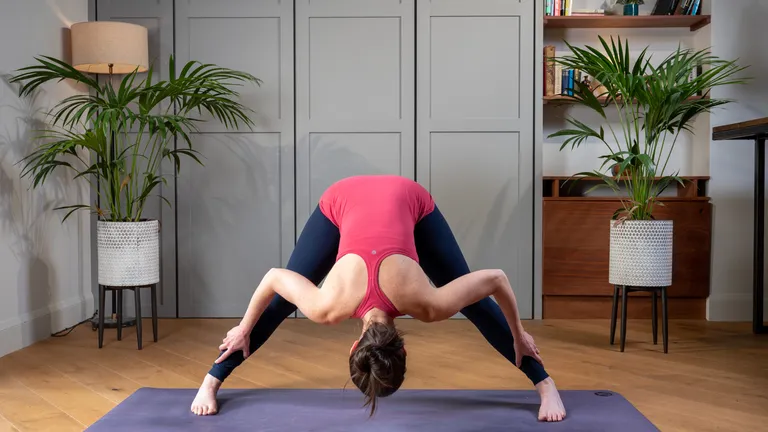
This standing stretch releases tension in your back and legs whilst calming your nervous system, perfect for easy yoga poses for flexibility.
How to do it: Stand with feet wide apart and toes facing forward. Fold forward from your hips, bringing hands to the floor, blocks, or your legs. Let your head hang heavy. Hold for 1 minute.
Benefits: Stretches inner thighs and hamstrings, releases spine, calms the mind through tension release.
Modification: Bend knees generously and place hands on blocks or your thighs. Focus on releasing your spine rather than achieving straight legs.
Common mistake: Forcing your head toward the floor. Let gravity do the work and simply relax into the stretch.
Sample 15-Minute Beginner Routine
What yoga poses should a beginner start with? Practice these first time yoga poses in this suggested yoga routine for beginners for a balanced yoga session:
- Cat-Cow (1 minute) – Warm up your spine.
- Child’s Pose (1 minute) – Centre yourself and breathe.
- Downward Dog (1 minute) – Build full-body strength.
- Forward Fold (1 minute) – Release back tension.
- Low Lunge (1 minute each side) – Open tight hips.
- Warrior 2 (1 minute each side) – Build stamina.
- Triangle (1 minute each side) – Stretch side body.
- Puppy Pose (1 minute) – Release shoulders.
- Bridge (1 minute) – Strengthen back.
- Wide-Legged Forward Fold (1 minute) – Cool down.
- Final Child’s Pose (2 minutes) – Rest completely.
Total time: Approximately 15 minutes
This gentle yoga for complete beginners flows naturally from warming movements through standing poses to gentle stretches and final relaxation. How often should beginners do yoga? Practice this sequence 2 to 3 times weekly to build strength and flexibility steadily.


