Blog
Yoga for Stress Relief: 10 Calming Poses to Reduce Stress
Stress has become an unwelcome companion in modern British life. Whether navigating workplace pressures through yoga for work stress, managing family responsibilities, or simply coping with daily demands, most of us carry tension in our bodies and minds. Does yoga help with stress? The answer is a resounding yes. Yoga for stress relief offers a proven, accessible solution that works within minutes.
Unlike temporary fixes that merely mask symptoms, stress relief yoga addresses stress at its root by calming your nervous system, releasing physical tension, and quieting mental chatter. This guide presents 10 gentle yoga poses specifically chosen for their stress-reducing properties, along with breathing techniques and a quick 10-minute routine you can practice anywhere, anytime you need relief.
You need no prior experience, special flexibility, or expensive equipment for this yoga for stress relief beginners approach—just a few minutes and willingness to breathe, move, and let go.
How Does Yoga Reduce Stress? The Science
Understanding how yoga reduces stress scientifically makes your practice more effective and builds confidence in this ancient stress management tool.
Cortisol Reduction
When you experience stress, your body releases cortisol, the primary stress hormone. Elevated cortisol over time contributes to anxiety, sleep problems, weight gain, and numerous health issues. Research shows that regular yoga practice significantly reduces cortisol levels, helping your body return to a balanced state and supporting emotional wellbeing.
Nervous System Regulation
Stress triggers your sympathetic nervous system—the fight-or-flight response. Yoga activates the opposing parasympathetic nervous system, sometimes called the "rest and digest" mode. This physiological shift creates the relaxation response, slowing your heart rate, lowering blood pressure, and signalling safety to your brain through the mind-body connection.
Mind-Body Connection
Calming yoga combines physical movement with focused breathing and present-moment awareness through mindfulness. This combination interrupts the stress cycle by redirecting your attention from worried thoughts to physical sensations. When you focus on holding a pose or coordinating breath with movement, anxious mental loops naturally dissolve.
Studies confirm that yoga for anxiety and stress produces measurable improvements in just 8 weeks of regular practice, with many experiencing relief after a single session. The holistic approach addresses both physical and mental aspects of tension simultaneously.
10 Best Yoga Poses for Stress Relief
What yoga is best for stress relief? These stress reducing yoga poses target common areas where stress accumulates whilst promoting deep relaxation throughout your entire system. Here are the best yoga poses to relieve stress organised by category.
Gentle Restorative Poses
1. Child's Pose
This restful position calms your nervous system whilst gently stretching your back and hips, making it one of the most effective calming yoga poses for anxiety.
How to practice:Â Kneel on your mat, sit back on your heels, and fold forward, extending arms ahead or alongside your body. Rest your forehead on the mat and breathe slowly for 1 to 3 minutes.
Stress-relief benefit: Creates a sense of safety and protection, naturally slowing your breath and heart rate whilst releasing muscle tension.
2. Legs Up the Wall
This restorative yoga for stress position reverses blood flow and triggers profound relaxation.
How to practice:Â Sit sideways against a wall, then swing your legs up whilst lowering your back to the floor. Rest with legs extended up the wall, arms relaxed by your sides. Remain here for 3 to 5 minutes.
Stress-relief benefit: Drains tension from tired legs, reduces anxiety, and shifts your nervous system into relaxation mode almost instantly.
3. Seated Forward Fold
This calming pose releases tight hamstrings and quiets mental chatter through gentle yoga for stress movement.
How to practice:Â Sit with legs extended forward. Hinge at your hips and fold over your legs, reaching toward your feet or resting hands on legs. Keep knees slightly bent. Hold for 1 to 2 minutes.
Stress-relief benefit: The forward fold's naturally introspective position calms your mind whilst releasing lower back strain and pressure.
Gentle Flowing Movements
4. Cat-Cow Pose
This simple flow synchronises breath with movement, releasing spine tension through rhythmic motion.
How to practice:Â Start on hands and knees. Inhale, drop your belly, lift your gaze (Cow). Exhale, round your spine, tuck your chin (Cat). Flow slowly for 1 to 2 minutes.
Stress-relief benefit: The rhythmic movement massages your spine whilst coordinating breath and body creates meditative calm and harmony.
5. Supine Spinal Twist
Gentle twisting releases physical and emotional tension held in your torso, providing deep relief.
How to practice:Â Lie on your back, draw both knees to chest, then lower them to one side whilst extending arms wide. Turn your head away from knees. Hold 1 to 2 minutes each side.
Stress-relief benefit: Twists wring out tension from your core whilst the restful position allows deep release and restoration.
6. Bridge Pose
This gentle backbend opens your chest and energises whilst remaining calming for yoga for stress and anxiety relief.
How to practice:Â Lie on your back with knees bent, feet flat. Press through feet to lift hips toward ceiling. Hold for 30 to 60 seconds, then slowly lower.
Stress-relief benefit: Opens the chest area where anxiety often manifests as tightness, whilst the gentle backbend lifts mood and alleviates overwhelm.
7. Corpse Pose
This final relaxation pose allows complete surrender and integration of your practice benefits.
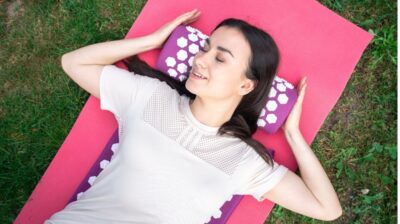
How to practice:Â Lie flat on your back, legs slightly apart, arms by sides with palms facing up. Close your eyes and breathe naturally for 5 to 10 minutes.
Stress-relief benefit: Conscious relaxation in this pose reduces stress hormones and creates deep rest, often more restorative than sleep for recharging mental clarity.
Standing Poses for Grounding
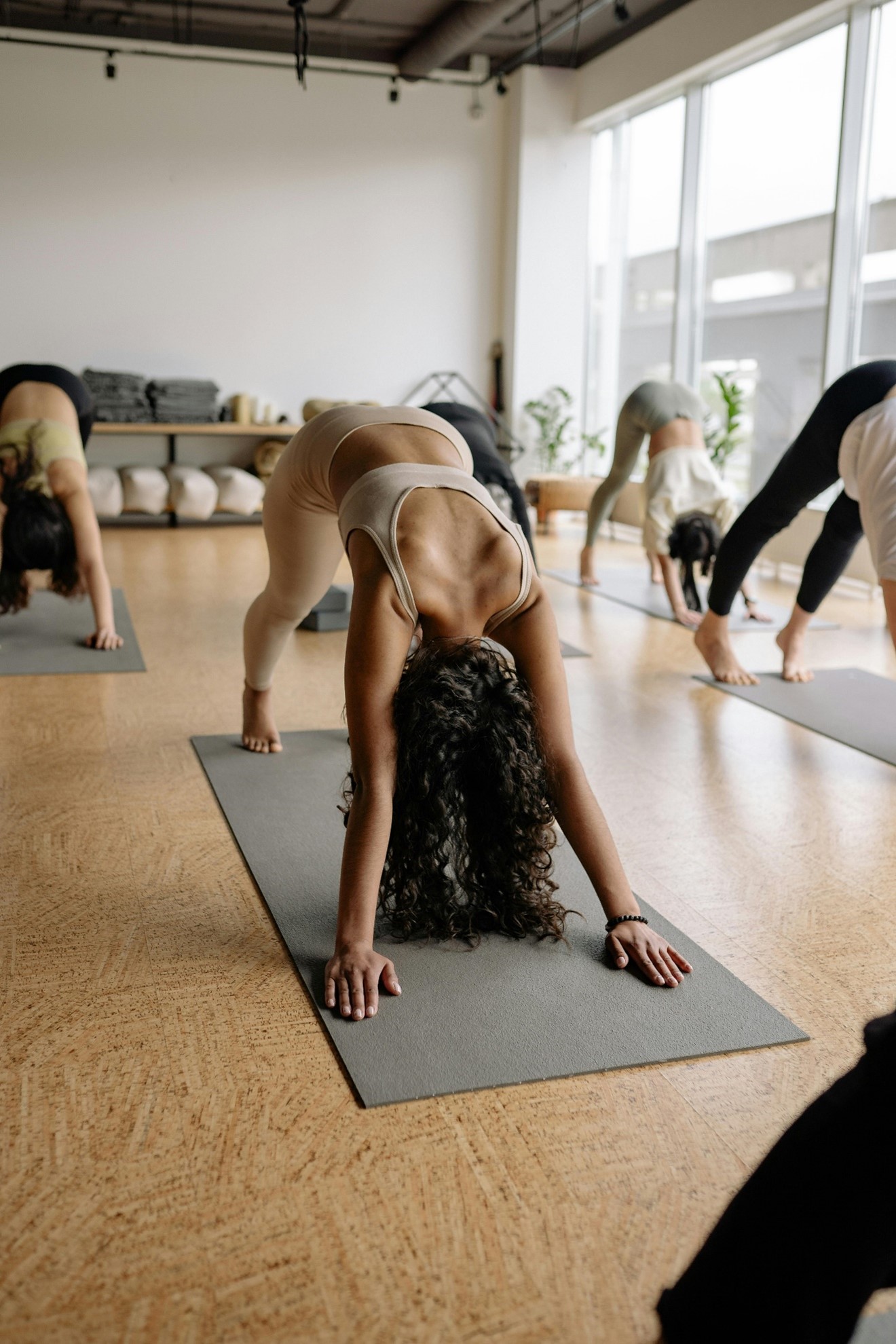
8. Standing Forward Fold
This standing stretch releases back tension whilst calming your nervous system through inversion.
How to practice:Â Stand with feet hip-width apart, knees slightly bent. Fold forward from hips, letting your upper body hang heavy. Hold 1 to 2 minutes.
Stress-relief benefit: The inversion increases blood flow to your brain whilst the folded position provides a sense of retreat from external stressors and burnout.
9. Tree Pose
Balance poses demand present-moment focus through awareness, interrupting worry patterns effectively.
How to practice:Â Stand on one leg, place the other foot on your inner thigh or calf (never on knee). Bring hands to heart or extend overhead. Hold 30 to 60 seconds each side.
Stress-relief benefit: The concentration required for balance naturally quiets mental chatter, whilst grounding through one foot creates stability and equilibrium.
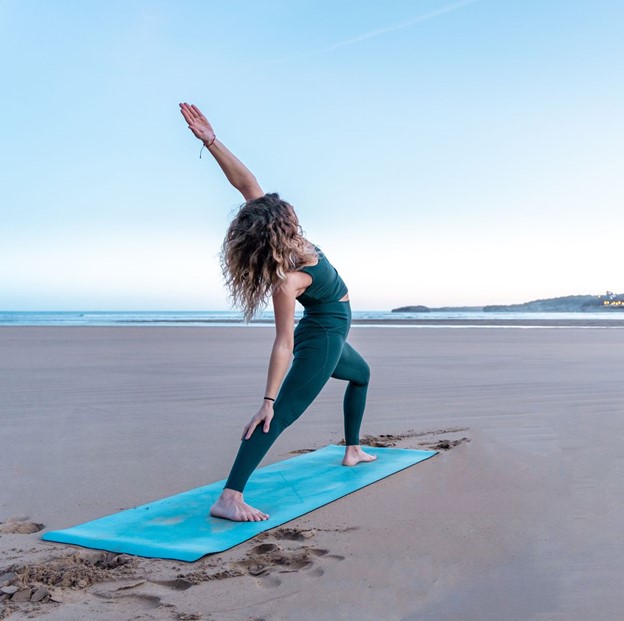
10. Warrior 2
This powerful pose builds inner strength whilst releasing shoulder and hip tension for yoga for stress management.
How to practice:Â Stand with legs wide, turn one foot out and bend that knee. Extend arms parallel to floor, gaze over front hand. Hold 30 to 60 seconds each side.
Stress-relief benefit:Â The strong stance builds confidence and resilience, whilst the pose naturally releases common stress-holding areas including tight shoulders.

Stress-Relief Breathing Techniques
Yoga breathing for stress enhances yoga's stress-reducing effects and works independently when you need quick relief through pranayama.
4-7-8 Breathing
This pranayama technique activates your relaxation response rapidly. Inhale through your nose for 4 counts, hold for 7 counts, exhale through your mouth for 8 counts. Repeat 4 to 8 cycles. This breath work slows your heart rate and calms racing thoughts within minutes, providing immediate tranquillity.
Alternate Nostril Breathing
This balancing technique calms your nervous system through controlled breathing. Close your right nostril with your thumb, inhale through left. Close left nostril with your ring finger, exhale through right. Inhale right, switch, exhale left. Continue for 2 to 3 minutes to restore balance.
Simple Deep Belly Breathing
Place one hand on your chest, one on your belly. Breathe deeply so your belly rises whilst your chest stays relatively still. This activates your diaphragm and triggers the relaxation response. Practice for 5 minutes whenever stress arises for immediate soothing relief.
10-Minute Stress Relief Yoga Routine
When time is limited, this quick yoga for stress relief sequence provides maximum benefit. Which yoga poses reduce stress fastest? This morning yoga for stress routine includes the most effective poses.
Morning or Anytime Routine:
- Cat-Cow (2 minutes) - Wake up your spine and release overnight tension.
- Child's Pose (1 minute) - Centre yourself and breathe deeply.
- Standing Forward Fold (1 minute) - Release tension from your back.
- Warrior 2 (1 minute each side) - Build strength and resilience.
- Seated Forward Fold (1 minute) - Calm your mind and ease worry.
- Supine Twist (1 minute each side) - Release deeply held strain.
- Corpse Pose (2 minutes) - Integrate benefits and rejuvenate.
Total:Â 10 minutes
Practice this stress relief yoga routine before work to start your day with calm and peace, during lunch to reset and recharge, or before bed to ensure restful sleep and diminish exhaustion.
Making Yoga Part of Your Stress Management
How often should I do yoga for stress? Practice yoga for stress relief 3 to 5 times weekly for optimal results. Even 10 to 15 minutes daily provides significant benefits for yoga for relaxation. During particularly stressful periods, brief sessions twice daily—morning and evening—help maintain equilibrium and harmony.
What type of yoga is best for anxiety? Gentle yoga for stress, restorative yoga for stress, and slow-paced Hatha yoga work best. These styles allow your nervous system to shift into relaxation mode. Avoid hot yoga or intense Vinyasa when managing anxiety, as they can overstimulate an already activated stress response.
A comfortable yoga mat supports your practice and encourages consistency. Our range of yoga mats provides the cushioning and grip you need for safe, effective practice at home.
Frequently Asked Questions
Yes, yoga significantly reduces stress through multiple mechanisms. It lowers cortisol levels, activates your parasympathetic nervous system, releases physical tension, and interrupts anxious thought patterns. Research confirms that regular practice produces measurable stress reduction, with many experiencing relief after a single session through the holistic mind-body approach.
Yoga reduces stress by activating your parasympathetic nervous system, which counters the fight-or-flight stress response. The combination of physical poses (asanas), controlled breathing (pranayama), and focused awareness lowers cortisol, slows heart rate, reduces blood pressure, and shifts brain activity toward calm states. Studies using brain imaging show yoga literally changes how your brain processes stress.
Yoga cannot “cure” stress, as stress is a natural response to life’s challenges. However, regular practice dramatically improves how you respond to stress, reducing its intensity and duration whilst building resilience. Many practitioners find yoga transforms their stress response so significantly that chronic stress patterns dissolve over time through consistent practice.
Absolutely. Yoga addresses both stress and anxiety effectively through yoga for stress and anxiety relief techniques. The physical poses release tension where anxiety manifests in your body, whilst breathing exercises calm your nervous system. The meditative aspect reduces the worried thinking that fuels anxiety. Many mental health professionals now recommend yoga alongside traditional treatments for holistic healing.
Gentle, slow-paced yoga styles work best for anxiety. Restorative yoga, gentle Hatha, and Yin yoga allow your nervous system to shift into relaxation mode. Avoid hot yoga or intense Vinyasa when managing anxiety, as they can overstimulate an already activated nervous system.
Start Your Stress Relief Practice Today
These yoga poses for stress relief provide a proven toolkit for managing the pressures of modern life. You need not practice all 10 poses every session—even choosing 2 or 3 and holding them for several minutes creates noticeable calm and serenity.
The beauty of yoga to reduce stress lies in its accessibility. No gym membership, no special equipment, no prior experience required. Just you, your breath, and a few minutes of intentional movement and stillness to soothe tension and restore peace.
Begin with the 10-minute yoga for stress relief routine suggested above, practising 3 times this week. Notice how your body feels, how your mind settles, and how stress loosens its grip. A comfortable mat supports your practice and encourages consistency.
Remember that yoga works cumulatively—each practice builds on the last, gradually rewiring your stress response and creating lasting calm. Your first session plants a seed. Regular practice grows resilience, tranquillity, and the ability to navigate life's challenges with greater ease.
Take a deep breath, step onto your mat, and gift yourself the stress relief you deserve.
About Daniel Harper
I'm Daniel Harper, and as a content creator for Romix, I’m passionate about bringing you fresh, insightful content that showcases the best of our innovative products. From sleek travel gear to top-notch gym accessories, I’m here to highlight how Romix can elevate your active lifestyle. My focus is on delivering articles that not only inform but also inspire you to push your boundaries and embrace every adventure. With Romix, I believe in blending practicality with style, and I’m excited to share how our products can make a real difference in your day-to-day life.
View all posts by Daniel Harper